
Updated January 27, 2026
How to Sue Your Employer for Changing Your Timecard in California
Can I sue my employer for changing my time card? Discovering that your employer has altered your hours worked is not only frustrating but potentially illegal under California law.
Unfortunately, timecard manipulation remains one of the most common forms of wage theft, costing California workers millions in unpaid wages annually. When employers reduce hours, eliminate overtime, or round down time worked, they're directly taking money you've rightfully earned.
As a California employee, you have specific legal protections against timecard manipulation. The California Labor Code provides strong safeguards for workers, often exceeding federal standards when it comes to wage and hour protections. Indeed, employers who falsify time records can face significant penalties, including compensatory damages, interest on unpaid wages, and additional punitive damages in severe cases.
If you've noticed discrepancies between your actual hours worked and what appears on your paycheck, you have the right to take action. This article will guide you through identifying illegal timecard changes, documenting the evidence you'll need, following proper reporting procedures, and when necessary, pursuing legal action against an employer who has manipulated your work hours.
Understanding your rights is the first step toward protecting your earned wages and holding employers accountable for unlawful practices.
What the Law Says About Timecard Changes in California
California maintains some of the strongest worker protection laws in the country, especially regarding timecard accuracy and wage payment. Understanding these legal protections is crucial before determining whether you can sue your employer for altering your time records.
Overview of California Labor Code
The California Labor Code establishes strict standards for employee timekeeping and compensation. Under California Labor Code Section 204, employers must pay employees for all hours worked, and any intentional alteration of timecards that reduces pay is classified as wage theft. This provides a clear legal foundation for employees seeking justice for timecard manipulation.
California employers must maintain detailed, accurate records of all nonexempt employees' work hours. These records must include:
- Start and end times for each shift
- Meal and rest breaks
- Total daily and weekly hours worked
- Overtime hours
Unlike some states with more relaxed standards, California explicitly prohibits employers from allowing employees to work "off-the-clock." This means all work-related tasks performed outside normal recorded hours must still be documented and compensated accordingly.
How federal and state laws interact
The Fair Labor Standards Act (FLSA) establishes the federal baseline for wage and hour regulations nationwide. This law requires employers to maintain specific records for nonexempt employees, particularly regarding total hours worked each day and week [1].
While the FLSA provides important protections, California law frequently offers stronger safeguards for workers. Nevertheless, both federal and state laws agree on fundamental principles: employers must pay nonexempt employees for all hours worked, and intentionally falsifying timecards is illegal under both frameworks [1].
Regarding timecard alterations specifically, both federal and state laws acknowledge that employers may make legitimate corrections to timecards. However, any adjustments must accurately reflect the actual hours worked. Furthermore, changes that result in underpayment are prohibited at both levels.
Key protections for hourly workers
Hourly employees in California, typically classified as non-exempt, enjoy particularly robust legal protections. These workers are entitled to:
- Overtime pay at 1.5 times the regular rate for hours worked beyond eight in a workday, beyond 40 in a workweek, or for the first eight hours on the seventh consecutive workday [2].
- Double-time pay (twice the regular rate) for hours worked beyond 12 in a workday [2].
- Required meal breaks of 30 minutes (unpaid) if working more than five hours, and 10-minute paid rest breaks for every four hours worked [2].
California law strictly prohibits several forms of timecard manipulation, including:
- Reducing recorded hours as a form of punishment
- Altering timecards to avoid paying overtime
- Changing records without employee consent
- Modifying timecards to avoid paying for authorized breaks
Consequently, employers who engage in illegal timecard practices face serious repercussions, including wage and hour complaints, mandatory payment of back wages, attorney fees, and both civil and criminal penalties under state and federal law [1]. Additionally, California allows employees to recover unpaid wages, interest, penalties, and attorney fees through legal action.
Should you discover your employer has illegally modified your timecard, you have specific legal remedies available. Although legal adjustments to correct genuine errors are permitted, any pattern of changes that results in underpayment constitutes wage theft—an actionable offense under California law.
When Is It Illegal for Employers to Change Your Timecard?
Timecard manipulation remains a prevalent issue in workplaces across California. While employers can make legitimate corrections to time records, certain modifications cross into illegal territory and may provide grounds for legal action.
Falsifying hours to avoid overtime
The most common form of illegal timecard alteration occurs when employers modify records to avoid paying overtime wages. Under the Fair Labor Standards Act (FLSA) and California labor laws, employers must pay nonexempt employees for all hours worked, including overtime. Shaving off hours or changing clock-out times to keep an employee's weekly hours under 40 is expressly prohibited.
In one notable case, an employee claimed his supervisor encouraged underreporting of hours and altered time records to avoid paying overtime. Despite the employer arguing that the employee violated company policy by inaccurately reporting hours, the court ruled in the employee's favor, stating, "Knowledge may be imputed to the employer when its supervisors or management encourage artificially low reporting" [3].
Some employers attempt to "carry over hours" from one week to another. For instance, if an employee works 35 hours one week and 45 the next, the employer might shift five hours to the first week to avoid paying overtime. This practice is strictly illegal [4].
Changing timecards without employee consent
Legitimate timecard corrections do exist—such as fixing clerical errors or addressing forgotten clock-ins. Yet, any modifications must accurately reflect actual hours worked and typically require employee notification or consent.
First, employers must ensure that their timekeeping practices remain consistent and transparent. Many organizations make small, seemingly insignificant changes to employee timecards—often just a few minutes per shift—which can accumulate to substantial wage theft over time [5].
Moreover, the Department of Labor clarified in a 2020 memo that "if the employer knows or has reason to believe that work is being performed, the time must be counted as hours worked" and "the employer cannot implicitly or overtly discourage or impede accurate reporting" [3].
Other illegal modifications include:
- Changing records to avoid paying for meal break premiums [6]
- Modifying timesheets to avoid paying for authorized breaks [7]
- Reducing recorded work hours as a cost-cutting measure [8]
Using edits as punishment or retaliation
Certain employers use timecard modifications as a form of discipline or retaliation, which is explicitly prohibited under California law.
The Fair Labor Standards Act clearly states that employers cannot change timecards "as a form of punishment (e.g., by reducing hours worked)" [7]. This applies even when employees have violated company policies. For example, if an employee arrives late, the employer must still pay for all hours actually worked and find other appropriate disciplinary measures.
In essence, any timecard manipulation resulting in reduced compensation constitutes wage theft. Employers who retaliate against employees for reporting labor law violations, including timecard alterations, may face additional whistleblower retaliation claims [6].
Financial repercussions for employees subjected to these illegal practices can be severe. As one expert explains: "Each action an employer takes to unlawfully change your time card hacks away at your financial stability… If they shave off two hours of overtime every week due to time card changes, that eight hours could take eight family dinners off the kitchen table" [9].
Therefore, identifying illegal timecard changes and understanding your legal options becomes crucial for protecting your rightful wages and financial wellbeing.
How to Identify If Your Timecard Was Illegally Changed
Detecting illegal timecard alterations requires vigilance and careful documentation on your part. Since timecard fraud often happens gradually through small changes, knowing what signs to look for can help you determine if you have grounds to pursue legal action against your employer.
Signs of wage theft
Wage theft through timecard manipulation often follows recognizable patterns. Watch for these warning signs:
- Your paystubs, timecards, and paychecks show inconsistencies when compared against each other [10]
- Regular modifications to your logged hours, particularly those that always decrease your total time
- Unexplained or excessive deductions appearing on your paycheck
- Your employer changing everyone's time to avoid overtime or double-time payments [11]
- Resistance from management when implementing new time tracking systems
According to the Association of Certified Fraud Examiners, businesses lose around 5% of annual revenue to fraud on average [12]. Much of this stems from timecard manipulation that initially appears minor but accumulates significantly over time.
Comparing your records with pay stubs
Maintaining personal documentation is essential. Primarily, this means:
- Keep your own detailed records of hours worked, including start times, end times, and breaks
- Take photos or screenshots of your clock-ins and clock-outs whenever possible
- Compare these personal records against your official pay stubs each pay period [13]
- Look for patterns in any discrepancies, rather than isolated incidents
The American Payroll Association reports the average employee loses 4.5 hours per week to time theft [14]. Conversely, many employees experience wage theft when employers manipulate their timecards. Regular comparison between your records and official documentation helps identify these issues quickly.
Unexplained edits or missing hours
Pay close attention to these specific irregularities:
- Consistent rounding down of your work hours (e.g., always rounding 8:07 to 8:15)
- Hours that mysteriously disappear between your timesheet submission and your paycheck
- Overtime hours that vanish or get redistributed to different pay periods [11]
- Meal breaks automatically deducted even when you worked through them [6]
- Time edits that occur without your knowledge or consent [15]
- Missing meal break premiums when you've worked through breaks [6]
Ultimately, if you notice your timecard being altered without your permission—especially when these changes consistently reduce your pay—document everything thoroughly. Request copies of both your original and revised time records [16]. These documents will become crucial evidence if you decide to pursue legal action against your employer for timecard manipulation.
Steps to Take Before Filing a Lawsuit
Before rushing to court, take several strategic steps to strengthen your case against an employer who changed your timecard. Building proper documentation and following established reporting procedures can sometimes resolve the issue without litigation while simultaneously creating a paper trail should legal action become necessary.
Documenting your hours and discrepancies
Begin by creating comprehensive personal records of your work hours. These records will serve as crucial evidence if you decide to sue your employer for changing your time card. Consider these documentation strategies:
- Keep detailed logs of your actual work hours, including precise clock-in and clock-out times
- Take photos or screenshots of your timecards immediately after punching in or out
- Save all pay stubs and compare them with your personal records
- Document any communications about schedule changes or overtime approvals
- Preserve relevant text messages or emails that might verify your work hours [17]
Even simple documentation like texting a friend "Working late tonight" can become valuable evidence in a wage dispute [17]. Fortunately, employees don't need to obtain employer records themselves, as companies are legally required to maintain and provide accurate timekeeping records during litigation [17].
Reporting the issue internally
Prior to taking legal action, attempt to resolve the matter within your company. Approach your direct supervisor or human resources department calmly and professionally. During this conversation:
- Ask specific questions about any noticed discrepancies
- Present your documentation without making accusations
- Document all conversations in writing (follow up with emails summarizing discussions)
- Request explanations for any timecard changes made without your consent [18]
Many companies will correct genuine errors once identified. Subsequently, if your employer refuses to address legitimate concerns, your documented attempts to resolve the issue internally will strengthen your legal position.
Filing a complaint with the Labor Commissioner
Provided internal resolution attempts fail, file a complaint with California's Labor Commissioner's Office. This step often precedes formal litigation yet carries significant weight:
- All services from the Labor Commissioner are free and confidential
- Your immigration status doesn't affect your right to file a complaint
- Employers cannot legally retaliate against you for filing a complaint [19]
When filing, include your contact information, company details (name, location, phone number), manager's name, type of work performed, and payment information [20]. Additionally, submit any supporting evidence like pay stubs and personal time records. The Department of Labor will investigate your claim, potentially resolving the issue without requiring you to sue your employer directly [18].
How to Sue Your Employer for Timecard Changes
Taking legal action becomes necessary after exhausting internal remedies and filing with the Labor Commissioner. Here's how to proceed if your employer has illegally altered your timecard.
When to consider legal action
Legal action becomes appropriate under several circumstances. First, consider suing if your employer repeatedly changes your timecards without consent, resulting in significant wage losses. Second, pursue litigation if you've attempted internal resolution and filed with the Labor Commissioner without satisfaction. Finally, legal action is warranted if the statute of limitations approaches—typically three years for most wage violations or four years for written contract violations [21].
Finding an employment lawyer
To locate qualified representation, search for attorneys specializing in employment law with specific experience in wage and hour claims. Most employment attorneys offer free consultations to evaluate your case [22]. Given these points, prepare for your consultation by gathering documentation of your work hours, communications about schedule changes, and pay records [9]. Many attorneys handle wage claims on a contingency basis, meaning you pay nothing upfront [23].
Filing a wage claim or civil lawsuit
You have two primary options: filing with the California Labor Commissioner or pursuing a civil lawsuit. The Labor Commissioner route begins with completing Form 1 [21]. A civil lawsuit, alternatively, may be appropriate for substantial claims or when multiple employees face similar violations, potentially qualifying for class action status [24]. To this end, your attorney will help determine which approach best suits your situation.
What to expect during the legal process
Henceforth, your claim will progress through several stages. If filed with the Labor Commissioner, expect an investigation followed by a settlement conference attempting to resolve the dispute [1]. Should resolution fail, a formal hearing occurs where both parties present evidence under oath [25]. At this point, either party can appeal the decision to civil court [1]. Throughout this process, employers cannot legally retaliate against you for asserting your rights [1].
Conclusion
Timecard manipulation represents a serious violation of your rights as a California worker. Throughout this guide, we explored how California's robust labor laws offer you significant protections against this common form of wage theft. Your employer must pay you for every hour worked—anything less constitutes an actionable offense under state law.
Documentation stands as your strongest ally when facing potential timecard fraud. Keeping detailed personal records, taking screenshots of clock-ins, and regularly comparing your records against official pay stubs will help identify discrepancies early. Additionally, addressing concerns internally first creates an important paper trail should legal action become necessary later.
Filing complaints with California's Labor Commissioner offers another powerful remedy before pursuing litigation. This step often resolves issues without court involvement while simultaneously strengthening your position if a lawsuit becomes necessary. Remember, these services remain free and confidential, regardless of your immigration status.
Legal action becomes appropriate after exhausting other remedies or when facing significant wage losses due to repeated timecard manipulation. Many employment attorneys offer free consultations and work on contingency arrangements, making legal representation accessible even without upfront fees. Whether pursuing a wage claim or civil lawsuit, you deserve compensation for every hour worked.
Ultimately, employers who change timecards without consent, falsify records to avoid overtime, or use edits as punishment face serious legal consequences in California. Armed with knowledge about your rights and proper documentation, you can effectively challenge these illegal practices. Time theft affects not just your paycheck but your financial stability and livelihood. Therefore, recognizing the signs early and taking appropriate action protects both your earned wages and your dignity as a worker.
References
[1] – https://www.dir.ca.gov/dlse/faq_reportingtimepay.htm
[2] – https://www.leichterlawfirm.com/blog/what-are-my-rights-as-an-hourly-employee-in-california/
[3] – https://www.chronotek.com/blog/time-card-mismanagement-is-it-illegal-to-change-an-employees-time-card
[4] – https://www.justiceatwork.com/what-to-do-if-your-boss-makes-you-falsify-time-entries/
[5] – https://www.anticounilaw.com/blog/2024/01/can-california-employers-alter-worker-timesheets/
[6] – https://www.justanswer.com/ca-employment-law/puaao-found-gm-changing-employees-timecards-whenever.html
[7] – https://www.trinet.com/insights/the-legalities-of-changing-employees-timecards
[8] – https://setyanlaw.com/can-employer-take-away-hours-already-worked/
[9] – https://www.wenzelfenton.com/blog/2023/08/21/sue-for-changing-time-card/
[10] – https://www.rnelsonlawgroup.com/blog/2023/12/recognizing-wage-theft-signs-every-employee-should-know/
[11] – https://www.avvo.com/legal-answers/is-it-illegal-for-your-work-company-to-change-your-584522.html
[12] – https://arcoro.com/resources/time-card-fraud
[13] – https://hrsolutions.net/why-employees-need-to-read-their-pay-stubs/
[14] – https://smartbarrel.io/blog/how-to-eliminate-timesheet-fraud/
[15] – https://www.epaysystems.com/maintain-timecard-compliance-avoiding-unauthorized-timecard/
[16] – https://www.mcoffmanlegal.com/can-my-boss-change-my-timecard-without-telling-me/
[17] – https://www.atlantaemploymentattorneysblog.com/what-to-do-if-your-employer-is-falsifying-your-timecard/
[18] – https://www.avvo.com/legal-answers/what-do-i-do-when-my-employer-is-tampering-with-my-2962795.html
[19] – https://www.dol.gov/agencies/whd/contact/complaints
[20] – https://www.dol.gov/agencies/whd/contact/complaints/information
[21] – https://www.tpslawfirm.com/blog/file-wage-claim-california/
[22] – https://workplacerightslaw.com/library/wage-hour/employer-made-a-mistake-on-my-paycheck/
[23] – https://www.kjtlawgroup.com/california/wage-and-hour-claims-laywer/
[24] – https://peterlawgroup.com/practice-areas/wage-and-hourly-class-action/
[25] – https://www.dir.ca.gov/dlse/dlseWageHearing.html
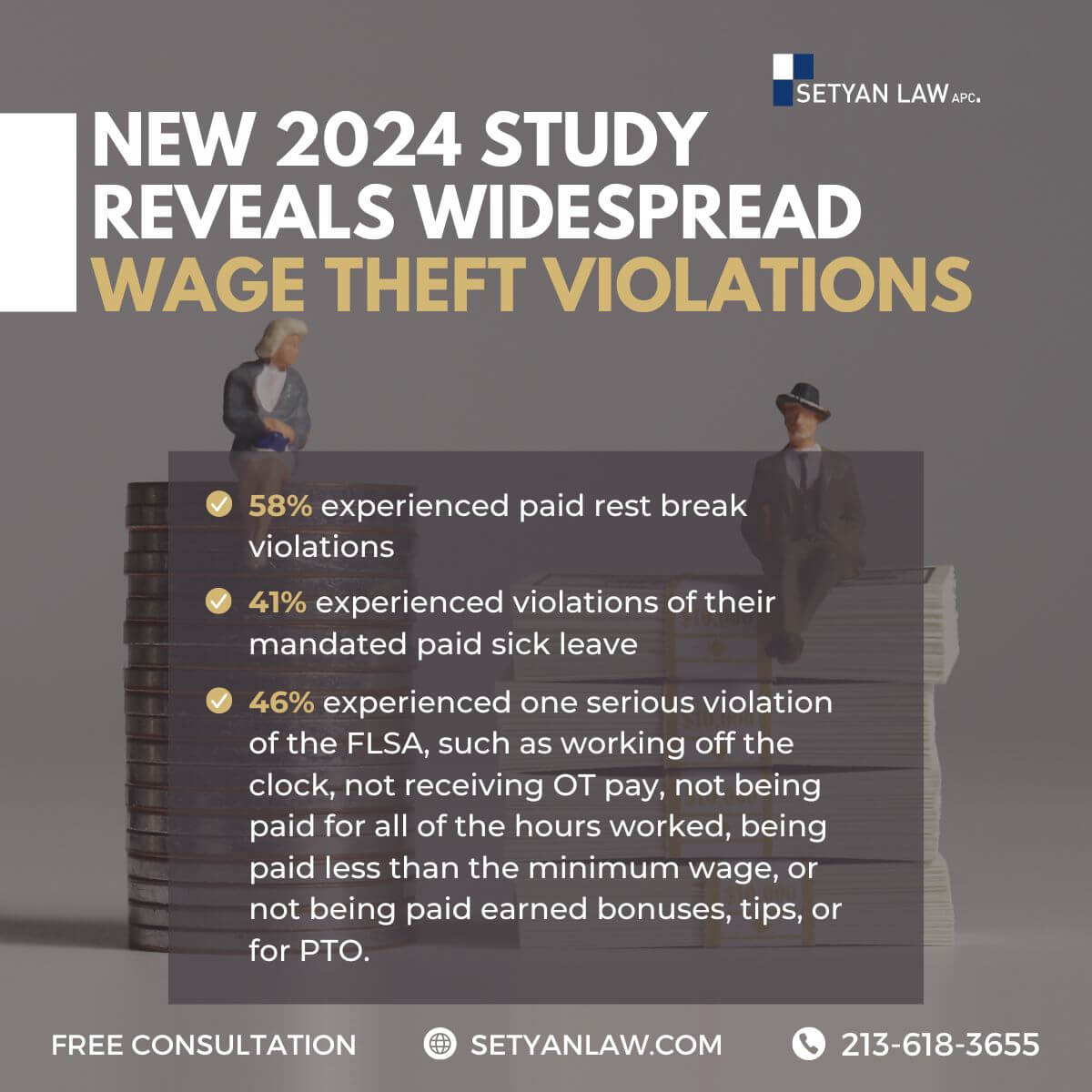
Call Setyan Law at (213)-618-3655 to schedule a free consultation.