
Updated January 27, 2026
How to Calculate Holiday Pay in California: Essential Guide
Did you know that holiday pay in California isn't actually required by state law? Despite what many employers and employees believe, California doesn't mandate premium pay or paid time off for holidays.
Surprisingly, California law treats holiday hours just like regular work hours. This creates significant confusion for employers trying to navigate payroll during the holiday season while remaining compliant with state regulations.
Whether you're preparing for upcoming holidays or reviewing your company's existing policies, understanding the rules around holiday compensation is essential for avoiding costly wage claims and maintaining employee satisfaction.
While the state doesn't require specific holiday pay, employers still need to understand when overtime applies on holidays, how employment contracts might create legal obligations, and what accommodations must be made for religious observances.
This guide will walk you through everything California employers need to know about holiday pay requirements, recognized holidays, religious accommodations, and compliance best practices. Let's clarify your obligations so you can develop fair and legally sound holiday pay policies.
Understanding California Holiday Pay Laws
Contrary to popular belief among many employees, California labor law establishes no mandate for employers to provide holiday pay or time off. This fact often surprises both workers and business owners who may assume holiday compensation is legally required. Let's examine what California law does say about handling holiday work and compensation.
No legal requirement for paid holidays
California employers maintain complete discretion regarding holiday policies. The state's Department of Labor Standards Enforcement (DLSE) clearly states that employers are not obligated to:
- Provide employees with paid holidays [1]
- Close their business on any holiday [1]
- Give employees time off for particular holidays [1]
- Pay additional wages for work performed on holidays [1]
Furthermore, employers can legally require staff to work on traditionally observed holidays like Thanksgiving, Christmas, or New Year's Day. Although the California legislature has previously proposed bills like the "Double Pay on the Holiday Act of 2016" that would require certain employers to pay employees double time for holiday work, none of these attempts have succeeded in becoming law [1].
Holiday hours treated like regular hours
From a legal standpoint, California treats holidays identically to any other workday. The DLSE explicitly states: "Hours worked on holidays, Saturdays, and Sundays are treated like hours worked on any other day of the week" [1]. This means employers calculate pay using the same methodology regardless of whether an employee works on a holiday or regular weekday.
Consequently, employees receive their standard rate of pay for holiday work unless:
- Their employment contract specifies otherwise
- A collective bargaining agreement mandates holiday premium pay
- The company has established policies offering additional compensation
Many employers voluntarily choose to provide premium holiday pay (commonly time-and-a-half or double-time) to boost morale and recognize employees working during times when others are celebrating. Nevertheless, these arrangements stem from company policy rather than state law requirements [2].
When overtime applies on holidays
Although California doesn't mandate special holiday pay rates, regular overtime rules remain fully applicable. Employees become entitled to overtime compensation on holidays under the same circumstances as any other day [3]:
- After working more than 8 hours in a single workday (time-and-a-half)
- After working more than 40 hours in a workweek (time-and-a-half)
- For the first 8 hours worked on the seventh consecutive day of work (time-and-a-half)
- After working more than 12 hours in a single workday (double-time)
- After working more than 8 hours on the seventh consecutive day (double-time)
For example, if an employee works 10 hours on Christmas Day, they're entitled to their regular rate for the first 8 hours plus time-and-a-half for the additional 2 hours—not because it's Christmas, but because they exceeded 8 hours in one workday [2].
It's essential to note that if employers provide paid holidays off, those hours don't count toward overtime calculations since they don't constitute "hours worked" under California labor law [4]. Only time when employees actively perform work counts toward daily or weekly overtime thresholds.
When Employers Must Provide Holiday Pay
While California law doesn't generally mandate holiday pay, several situations create legal obligations for employers to provide it. Understanding these exceptions helps employers avoid potential wage claims and maintain compliance with their legal responsibilities.
Employment contracts and collective bargaining agreements
Employment contracts that explicitly promise holiday compensation create legally binding obligations. Once an employer makes contractual commitments regarding holiday pay, they must honor these terms regardless of California's lack of statutory requirements.
Collective bargaining agreements (CBAs) frequently contain detailed holiday pay provisions. These union agreements typically:
- Identify specific paid holidays recognized by the company
- Establish eligibility criteria for receiving holiday pay
- Specify premium rates for employees working designated holidays
- Clarify observance dates for holidays falling on weekends
CBAs may also condition holiday pay on employees working their full schedule on days immediately before and after the holiday, except in cases of excused absences. These contractual terms override California's general stance on holiday pay and become enforceable obligations between employers and unionized employees.
Company policies and handbooks
Even without formal contracts, an employer's written policies or consistent practices regarding holiday pay can create binding obligations. Company policies outlined in employee handbooks essentially function as contracts between employers and their staff.
Accordingly, if your employee handbook states workers receive time-and-a-half for working Thanksgiving, you must honor this commitment—despite California not requiring such premium pay. Moreover, failing to follow your own established holiday policies could potentially lead to employment lawsuits.
Many businesses implement eligibility requirements in their holiday pay policies:
- Minimum tenure (30-90 days employment before qualifying)
- Hours thresholds (part-timers must average specific weekly hours)
- Attendance rules (employees must work scheduled shifts before/after holidays)
Essentially, every employer should document their holiday pay policies clearly in writing. Your policy should address which holidays are recognized, whether employees receive paid time off or premium pay, eligibility requirements, calculation methods, and procedures for holidays falling during scheduled PTO.
Federal employee exceptions
Unlike private-sector workers, most federal employees enjoy significantly greater holiday benefits. Federal workers typically receive paid time off for all eleven federal holidays designated under 5 U.S.C. 6103(a).
Additionally, federal employees required to work during designated holiday hours generally receive holiday premium pay. These protections apply specifically to employees covered by the holiday and premium pay provisions in title 5 of the United States Code.
Federal employees must meet certain conditions to maintain eligibility for these benefits. Primarily, they must be in a pay status or paid time off status on their scheduled workdays either before or after a holiday. The minimum time required in pay status to receive paid holiday time off is one hour.
However, not all government workers receive these protections. Notably, employees with intermittent work schedules are not entitled to paid holiday time off or holiday premium pay. Likewise, employees receiving annual premium pay for standby duty and firefighters covered by special pay provisions face similar exclusions.
Remember that state laws governing holiday pay apply differently to public-sector employees than private-sector workers. While private employers maintain significant flexibility regarding holiday compensation, government agencies often follow more structured policies dictated by applicable statutes and regulations.
Recognized Holidays and Common Practices
Most California employers recognize certain holidays throughout the year, even though state law doesn't mandate holiday pay. Understanding which holidays are typically observed and how they're handled helps businesses establish competitive policies.
List of commonly observed holidays
Many California employers acknowledge a core set of holidays, often mirroring those recognized by the state government:
- New Year's Day (January 1)
- Martin Luther King Jr. Day (third Monday in January)
- Presidents' Day (third Monday in February)
- Memorial Day (last Monday in May)
- Independence Day (July 4)
- Labor Day (first Monday in September)
- Veterans Day (November 11)
- Thanksgiving Day (fourth Thursday in November)
- Day after Thanksgiving (fourth Friday in November)
- Christmas Day (December 25)
Private sector employers frequently offer what's known as the "standard six" holidays: New Year's Day, Memorial Day, Independence Day, Labor Day, Thanksgiving, and Christmas. Some businesses additionally recognize Cesar Chavez Day (March 31), Juneteenth (June 19), Indigenous People's Day (fourth Friday in September), or Columbus Day (second Monday in October).
Weekend holiday adjustments
In practice, whenever holidays fall on non-work days, employers typically observe them on the nearest workday. For holidays landing on Saturdays, the preceding Friday is commonly designated as the observed day off [5]. Similarly, Sunday holidays usually shift to the following Monday [6].
The California State Treasurer's Office provides a good example of standard practice: "If January 1, March 31, July 4, November 11, or December 25 falls on a Sunday, the following Monday shall be deemed the holiday in lieu of the day observed. If November 11 falls on a Saturday, the preceding Friday shall be deemed to be the holiday in lieu of the day observed" [6].
Voluntary paid time off or premium pay
Given that California doesn't require special compensation for holidays, employers exercise various options to maintain competitive benefits packages:
Premium pay represents one common approach, especially for businesses that must operate on holidays like restaurants, retail stores, and grocers. These establishments often incentivize holiday shifts with time-and-a-half (1.5x regular rate) or double-time (2x regular rate) pay.
As an alternative, many employers offer floating holidays, providing employees flexibility to observe personal, cultural, or religious occasions not included in the standard holiday schedule [7]. This practice allows workers to extend weekend holidays or combine with other paid time off.
Some organizations implement a lump-sum "holiday pay" benefit instead of specific holidays off. This approach reduces administrative burden by giving employees greater flexibility in using their time while potentially decreasing absenteeism [7].
Clearly documenting your company's policy regarding recognized holidays, eligibility requirements, and calculation methods helps avoid misunderstandings and potential disputes [8].
Religious and Cultural Accommodations
Beyond standard holiday policies, California employers face specific legal requirements regarding religious accommodations. This aspect of employment law demands particular attention as it intersects with holiday scheduling practices.
Legal obligation to accommodate religious observances
California employers with five or more employees must provide reasonable accommodations for religious observances under the Fair Employment and Housing Act (FEHA). The California Workplace Religious Freedom Act further expanded these protections in 2012 to include religious dress and grooming practices.
At the federal level, Title VII of the Civil Rights Act prohibits discrimination based on religion and requires employers with 15 or more employees to accommodate reasonable religious requests [11]. The Supreme Court's 2023 ruling in Groff v. DeJoy significantly strengthened these protections by raising the bar for employers claiming "undue hardship" [11]. Under this decision, employers must demonstrate a "substantial burden" rather than merely minimal cost to deny religious accommodation requests.
Importantly, protected religious beliefs extend beyond traditional organized religions to include sincerely held moral or ethical beliefs that function as religious convictions in a person's life [12].
Examples of reasonable accommodations
Reasonable accommodations for religious holidays may include:
- Flexible scheduling or shift swaps with other employees
- Job restructuring or reassignment to avoid conflicts
- Allowing unpaid time off for religious observances
- Permitting schedule adjustments for travel time to religious events
- Modifying dress codes to allow religious attire or grooming practices
The accommodation process requires an interactive dialog between employer and employee to find appropriate solutions. Companies in industries that operate continuously (healthcare, hospitality, transportation) might coordinate schedules so employees can cover for colleagues observing different religious holidays [11].
Unpaid vs paid religious leave
California law requires employers to provide reasonable accommodations for religious observances but doesn't explicitly mandate that such leave be paid. The legal minimum obligation typically involves allowing unpaid leave or permitting employees to use accrued paid time off for religious holidays.
Many employers offer more generous policies as best practices, including dedicated floating holidays that employees can use for religious observances. In practice, a reasonable accommodation might include permitting employees who have worked extra hours to take equivalent time off for religious holidays without using vacation time [9].
Failing to provide religious accommodations can expose employers to discrimination claims. Particularly after the Groff decision, courts now require employers to demonstrate that accommodating religious beliefs would create substantial operational difficulties—a higher standard than previously applied [12].
Payroll Timing and Compliance Tips
Managing payroll during holiday periods presents unique challenges for California employers. Proper handling of payday timing and maintaining clear documentation helps businesses avoid costly wage disputes while ensuring compliance with state regulations.
What happens if payday falls on a holiday
When a regular payday coincides with a holiday and your business closes for observation, California law permits you to distribute wages on the next business day [15]. This flexibility helps accommodate administrative realities without violating wage payment requirements.
The California Supreme Court has addressed related timing issues, confirming that when weekly-paid wages are due on a weekend or holiday, they may be paid on the next business day [17]. Employers should review the list of holidays recognized under California Government Code Section 6700 to anticipate potential payday conflicts throughout the year [18].
Avoiding wage claim disputes
Courts interpret holiday pay policies as contractual agreements between employers and employees. Hence, any ambiguity or vagueness in these policies will likely be interpreted in favor of the employee during disputes [19].
To minimize litigation risks:
- Keep detailed records of all holiday work schedules and compensation
- Maintain consistent application of holiday pay policies across all eligible employees
- Avoid making sudden changes to established holiday practices without proper notification
- Ensure timely payment of all promised holiday compensation
Remember that failure to post payday notices or pay wages in good funds on regular designated paydays constitutes a misdemeanor under Labor Code Section 215 [15].
Documenting holiday pay policies clearly
A comprehensive holiday pay policy must address several specific scenarios to prevent misunderstandings [19]. Your written policy should explicitly detail:
- What occurs when employees work on company-designated holidays
- How holiday pay is handled when holidays fall on days the business is closed
- Any prerequisites employees must satisfy before becoming eligible for holiday benefits
- Procedures for floating holidays versus fixed holidays
Consider having employment law counsel review your holiday policies before implementation [19]. This preventive step helps identify potential areas of confusion or conflict with existing wage and hour regulations.
Finally, ensure employees can easily access these policies through handbooks, onboarding materials, and internal communication platforms to maintain transparency and compliance.
Conclusion
Understanding California's holiday pay regulations proves essential for employers seeking to maintain compliance while developing fair compensation policies. Despite common misconceptions, California law does not mandate special holiday compensation or time off. Holiday hours essentially function as regular work hours, with standard overtime rules applying regardless of the date on the calendar.
Nevertheless, employers must honor holiday pay obligations created through employment contracts, collective bargaining agreements, or established company policies. These self-imposed commitments become legally binding once implemented, therefore requiring consistent application across your workforce.
Religious accommodations present another crucial consideration for California employers. Legal requirements demand reasonable accommodations for employees' religious observances, particularly after the Supreme Court's strengthened protections in the Groff v. DeJoy ruling. Smart employers develop flexible scheduling options and floating holiday policies to address these needs proactively.
Many businesses voluntarily offer holiday benefits through paid time off or premium pay rates to remain competitive in the labor market and boost employee morale. Clearly documented holiday policies help prevent misunderstandings and potential wage disputes. Your policy should specifically address recognized holidays, eligibility requirements, calculation methods, and procedures for holidays falling on non-work days.
Remember that federal employees typically enjoy more substantial holiday benefits than their private-sector counterparts. Additionally, payroll timing adjustments become permissible when regular paydays coincide with observed holidays.
Ultimately, while California grants employers significant flexibility regarding holiday compensation, a thoughtful approach balances business needs with workforce expectations. Companies that establish transparent, consistent holiday policies tend to foster greater employee satisfaction while simultaneously minimizing legal exposure. Your holiday pay practices may not face strict regulatory requirements, but they undoubtedly influence your company culture and employee retention efforts.
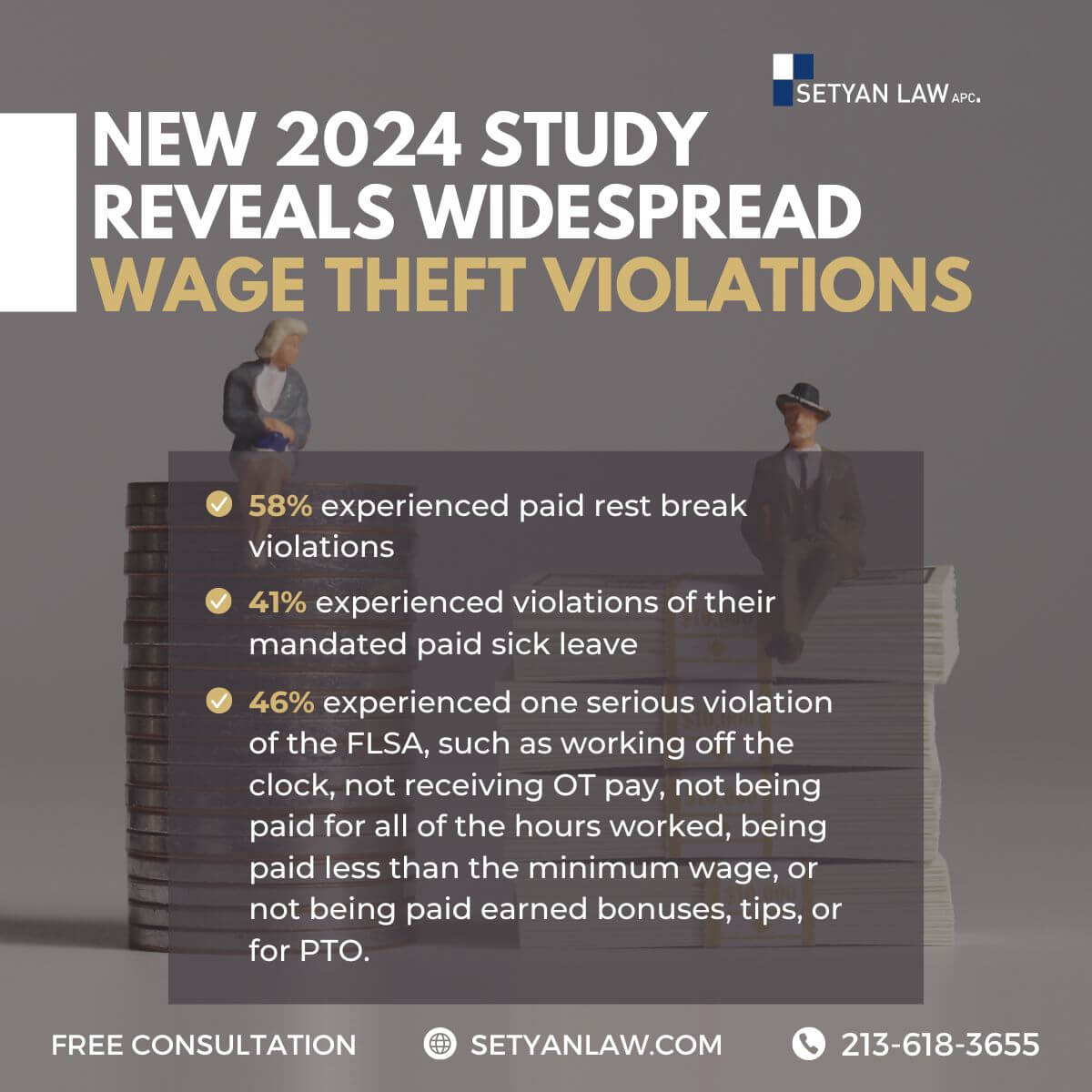
Call Setyan Law at (213)-618-3655 to schedule a free consultation.