
Updated January 26, 2026
How a Long Beach Employment Lawyer Wins Sexual Harassment Cases
Sexual harassment can devastate your career and well-being, but a Long Beach employment lawyer with the right expertise can be your strongest ally in fighting back. Unfortunately, workplace sexual harassment remains pervasive despite clear laws prohibiting such conduct. In fact, many victims feel powerless against employers with seemingly unlimited resources and legal teams.
Behind every successful sexual harassment lawsuit is a strategic legal approach that combines thorough evidence gathering, expert knowledge of California employment laws, and tactical negotiation skills. When you work with an experienced Long Beach employment attorney, you gain access to proven strategies that have helped countless victims secure justice and compensation. Throughout this article, we'll examine real cases where victims prevailed against workplace harassers, revealing the exact legal techniques that made these victories possible. Additionally, you'll discover what truly qualifies as actionable harassment under California law and what to expect when working with a legal professional on your case.
Setyan Law

It’s always best to consult a qualified Workplace Sexual Harassment Attorney regarding your case before you file. Employment law has many pitfalls and an attorney can help you navigate past them safely. Sam Setyan will review your grievance, tell you your options, and guide you to the most favorable outcome possible. It’s your call.
Call 213-618-3655 for a free consultation.
What qualifies as sexual harassment under California law
California's legal framework offers robust protection against workplace sexual harassment through both federal and state laws. Under California's Fair Employment and Housing Act (FEHA) and Title VII of the Civil Rights Act of 1964, sexual harassment is classified as a form of sex discrimination that creates an intimidating, hostile, or offensive work environment based on an employee's sex.
The law defines sexual harassment broadly as unwelcome sexual advances, requests for sexual favors, or other visual, verbal, or physical conduct of a sexual nature. Furthermore, California law specifically states that offensive conduct need not be motivated by sexual desire – it can be based on an employee's actual or perceived sex, gender identity, sexual orientation, pregnancy, or related medical conditions.
Quid pro quo vs. hostile work environment
Sexual harassment in California workplaces falls into two distinct legal categories, each with unique characteristics:
Quid Pro Quo Harassment ("this for that")
This occurs when someone in a position of authority demands sexual favors in exchange for job benefits or threatens negative consequences if those demands are refused. For a valid claim:
- The harasser must hold power over the victim (typically a supervisor or manager)
- Job benefits or threats must be explicitly or implicitly tied to sexual conduct
- Even a single incident may qualify as quid pro quo harassment
For instance, a manager saying "If you want this promotion, you'll need to meet me for drinks after work and more" or a supervisor warning "If you don't socialize with me, I'm going to write you up" when "socializing" implies flirtation, constitutes quid pro quo harassment.
Hostile Work Environment Harassment
This more common form involves unwelcome behavior that creates an abusive or offensive work atmosphere. Unlike quid pro quo, hostile work environment:
- Need not come from someone in authority
- Requires conduct that's either severe or pervasive enough to interfere with work
- Can come from coworkers, subordinates, vendors, or customers
- Must create conditions a reasonable person would find hostile
Examples include repeated sexual comments about appearance, crude jokes, unwanted texts of a sexual nature, inappropriate touching, sharing pornographic material, or pressuring colleagues to engage in flirtatious behavior.
California recognizes three forms of harassing conduct:
- Verbal harassment (unwelcome comments, sexual remarks, slurs)
- Physical harassment (unwanted touching, assault, blocking movement)
- Visual harassment (derogatory posters, obscene gestures, explicit images)
Examples from real Long Beach cases
Long Beach has seen several significant sexual harassment cases that illustrate how these legal definitions apply in practice:
In a landmark case, two former Long Beach policewomen won nearly $3 million in a sexual harassment lawsuit against the city. One officer reported that male colleagues refused to provide backup assistance, called her vulgar names, and sent offensive messages over police computers. She also faced retaliation after complaining about a supervisor who threatened her when their relationship ended .
The second officer, the first woman in the department's prestigious canine unit, testified to facing hostility, graphic sexual language, ridicule, and isolation. Most alarmingly, she was placed in physical danger when fellow officers allowed their dogs to attack her . During the trial, multiple policewomen testified that sexual harassment was endemic in the Long Beach Police Department, with supervisors doing little to address it.
These cases highlight how a Long Beach employment lawyer can help victims document patterns of harassment, gather witness testimony, and build compelling cases even against powerful institutions like police departments. They also demonstrate that both hostile work environment and retaliation claims can succeed when properly presented with sufficient evidence.
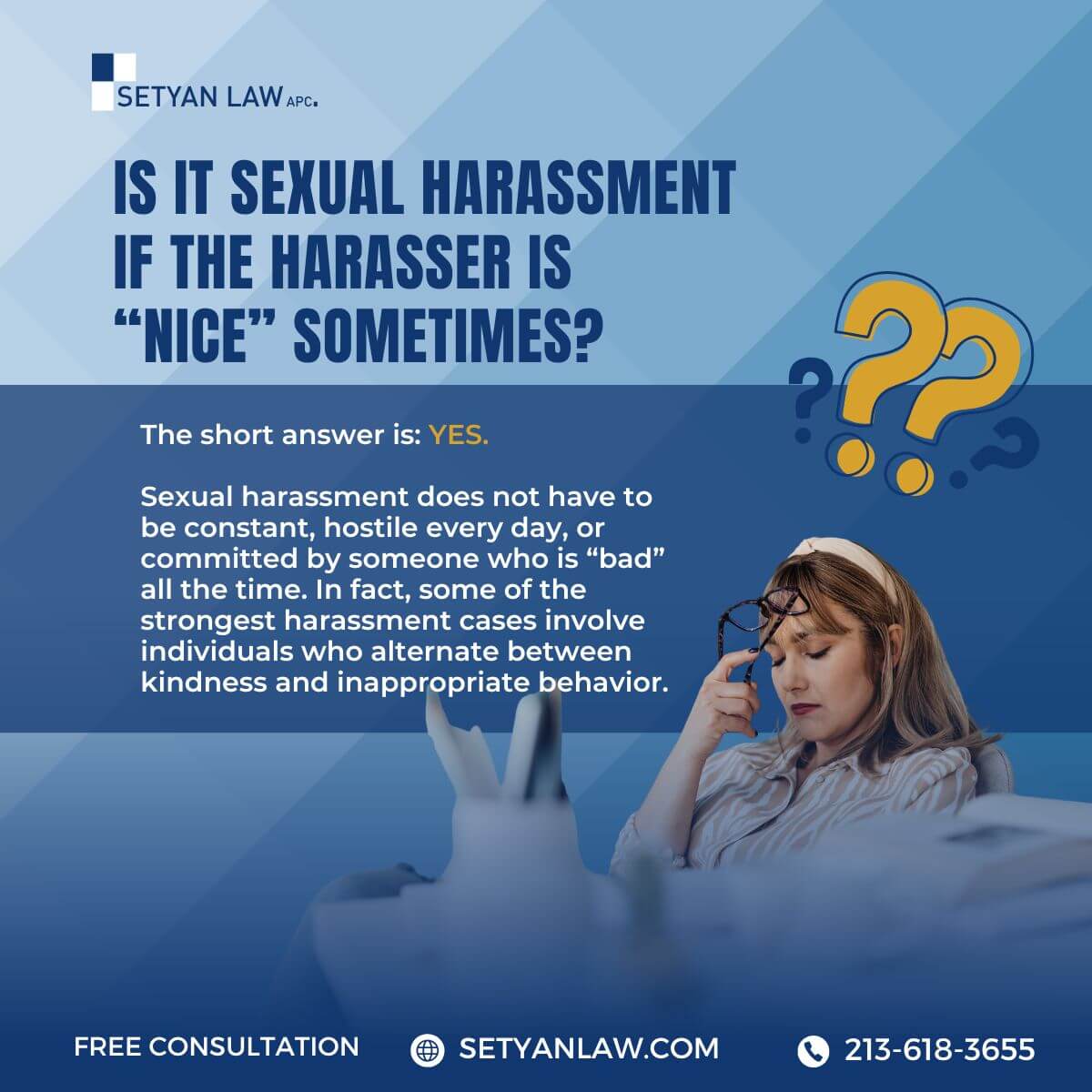
Understanding these legal distinctions is crucial for anyone experiencing workplace harassment in Long Beach. By recognizing which category your experience falls into, you can better prepare to protect your rights with appropriate legal assistance.
How Long Beach employment lawyers build strong cases
Building a successful sexual harassment case requires meticulous evidence collection and strategic legal analysis. Experienced Long Beach employment lawyers understand that winning these sensitive cases hinges on having solid documentation, credible witness testimony, and properly leveraged employment records.
Gathering evidence and documentation
Successful sexual harassment cases rely on multiple types of evidence that collectively establish a pattern of inappropriate behavior. Long Beach employment lawyers typically focus on collecting:
- Direct evidence including statements, emails, text messages, or photographs that explicitly prove harassment occurred
- Circumstantial evidence that implies harassment through patterns of behavior or context
- Documentation of incidents with dates, times, locations, and descriptions of misconduct
- Corroborating evidence that reinforces claims through witness statements or contemporaneous notes
Victims play a crucial role in evidence collection by maintaining detailed records. Employment attorneys recommend documenting incidents immediately after they occur to establish a clear timeline. Subsequently, preserving all physical and electronic evidence becomes essential—including emails, texts, voicemails, and photographs that demonstrate harassment .
Maintaining a comprehensive harassment log outside your workplace serves as powerful documentation. This log should record offensive conversations, sexual contact, workplace incidents, and any complaints you've previously made. Moreover, noting your emotional reactions can strengthen your case, even if no one witnessed them .
Interviewing witnesses and coworkers
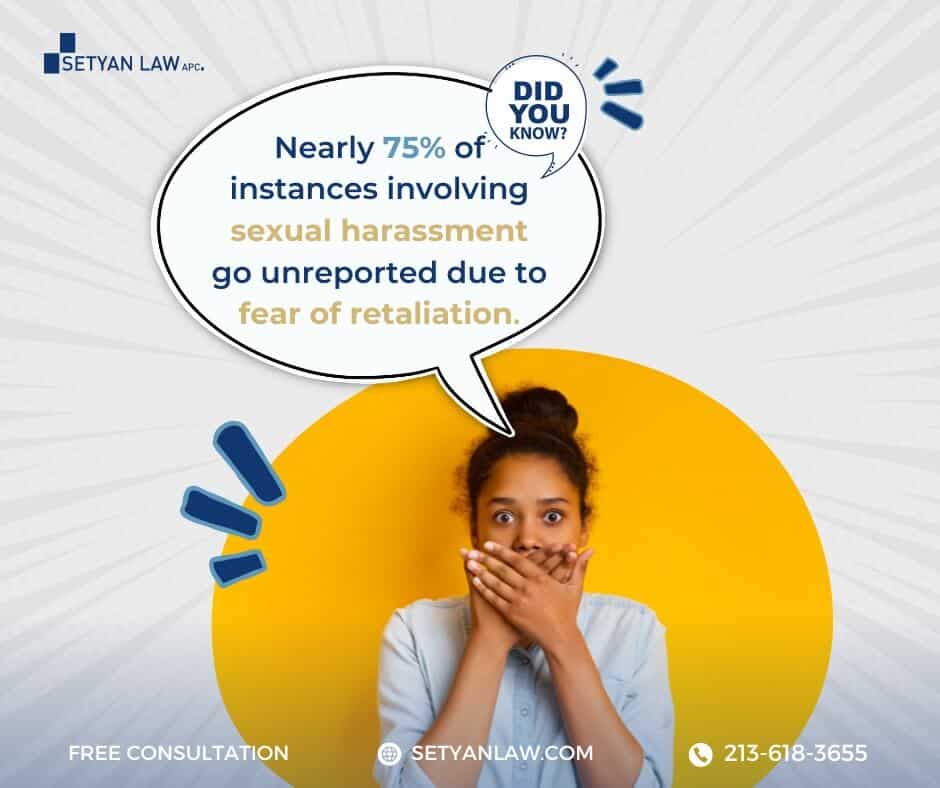
Witnesses provide vital corroboration in sexual harassment cases, especially considering most incidents occur without observers present . Long Beach employment lawyers conduct thorough witness interviews to build credibility for their clients' claims.
Bystanders who observe harassment can play multiple critical roles. They might document incidents through recordings or written notes, support victims during reporting processes, or serve as witnesses during legal proceedings . Generally, attorneys seek witnesses who can verify:
- The specific harassment behaviors observed
- The work environment's overall hostility
- Prior complaints about the harasser
- Management's response to reported incidents
Prior to trial, experienced lawyers typically assign team members to interview coworkers, gather supportive testimony, and identify other potential victims . This comprehensive approach helps counter the common defense strategy of dismissing harassment as a "he said/she said" situation.
Using employment records and HR reports
Employment records and HR documentation constitute powerful evidence in harassment cases. Attorneys frequently request:
- Personnel files of the alleged harasser
- Communications between the harasser and management
- Performance evaluations before and after harassment began
- Copies of formal complaints filed with HR
- Company sexual harassment policies
- Records of any previous investigations
However, record-keeping problems often hinder cases. A state audit discovered that in half of 40 sexual harassment cases studied, files lacked crucial documents like interview notes, evidence gathered, and records of corrective measures . While California doesn't explicitly require employers to maintain complaint records, throwing out such documentation could indicate failure to meet legal obligations to prevent harassment .
Consequently, Long Beach employment lawyers must sometimes conduct independent investigations when employer documentation proves insufficient. They examine whether proper protocols were followed after complaints and determine if employers maintained appropriate records of repeat offenders—a requirement that's frequently overlooked .
Through this methodical evidence-gathering process, skilled attorneys transform seemingly isolated incidents into compelling cases that demonstrate patterns of harassment and employer negligence.
Legal strategies that win sexual harassment lawsuits
Winning a sexual harassment lawsuit requires strategic legal maneuvering beyond just gathering evidence. First and foremost, a Long Beach employment lawyer must navigate complex administrative procedures while carefully leveraging California's employer liability laws to maximize client outcomes.
Filing with the EEOC or DFEH
The path to justice begins with filing an administrative complaint before pursuing court action. In California, victims typically have three years from the harassment date to file with the Department of Fair Employment and Housing (DFEH), following the 2020 extension under FEHA . Simultaneously, federal claims must be filed with the Equal Employment Opportunity Commission (EEOC) within 300 days .
Filing these administrative complaints isn't merely procedural—it's strategic. Although victims can file without representation, experienced Long Beach employment lawyers often recommend obtaining a "right to sue" letter rather than waiting for a full agency investigation, as negative agency findings can undermine subsequent litigation . Plus, attorneys help prevent common filing errors that could jeopardize cases from the start.
Negotiating settlements vs. going to trial
Most sexual harassment cases resolve through settlement rather than trial. Skilled negotiations require understanding that 70-95% of decision-making is based on emotion rather than logic . Accordingly, effective attorneys frame demands with compelling emotional appeals that make settlement figures appear reasonable.
Settlement considerations include:
- Confidentiality provisions (which have high value to employers)
- Non-disclosure limitations under California's SB 820
- Emotional closure versus maximum financial recovery
- Risk assessment of witness credibility issues
A strategic Long Beach employment lawyer may use the EEOC/DFEH process as leverage, recognizing that employers often prefer settling confidentially rather than facing public scrutiny through agency investigations or trials.
Leveraging employer liability laws
California's employer liability laws provide powerful advantages in sexual harassment cases. Indeed, under California Government Code §12940(j)(1), employers are "strictly liable" for sexual harassment committed by supervisors or agents, regardless of whether the employer knew about the harassment or had policies against it .
This strict liability standard applies whenever the harasser meets California's broad definition of "supervisor"—anyone with authority to hire, fire, assign work, or effectively recommend such actions using independent judgment . As a result, employers cannot escape liability by claiming ignorance of a supervisor's misconduct.
For non-supervisory harassment, victims must prove the employer knew or should have known about the harassment and failed to take immediate corrective action . Coupled with California's affirmative duty requiring employers to prevent harassment, these legal standards create multiple pathways for holding employers accountable.
Real stories of successful sexual harassment cases
Behind every landmark sexual harassment verdict stands a lawyer who meticulously crafted a winning case strategy. These real-life examples demonstrate how Long Beach employment lawyers have secured justice for clients facing workplace harassment.
Case 1: Hostile work environment in a tech firm
In a precedent-setting California case, a court established that even a single racial slur from a non-supervisory coworker could create an actionable hostile work environment. The plaintiff, a Black woman employed in a tech office, reported that a coworker had quietly directed the "N-word" toward her. Though the incident occurred only once, the court determined it was sufficiently severe to alter working conditions fundamentally. This ruling confirms that California law recognizes some conduct is so intrinsically harmful that frequency becomes irrelevant .
What strengthened this case was the comprehensive documentation of psychological effects, including medically documented "severe workplace stress" requiring multiple weeks of leave. Additionally, the court considered contextual factors like perceived favoritism and inadequate employer response as supporting evidence .
Case 2: Quid pro quo in a restaurant chain
McDonald's faced multiple sexual harassment lawsuits involving explicit quid pro quo demands. In one case, female employees alleged managers offered preferred schedules and better shifts in exchange for sexual favors. After employees rejected these advances, they faced punishment through schedule changes that significantly reduced their tips .
The restaurant industry has proven particularly prone to harassment claims—more cases are filed in this sector than any other American industry . In 2020, McDonald's confronted a massive $500 million sexual harassment lawsuit addressing systemic issues across its locations . Cases succeeded partly because attorneys demonstrated how the power imbalance between managers controlling schedules and employees dependent on tips created perfect conditions for exploitation.
Case 3: Retaliation after reporting harassment
Two Long Beach nurses secured a $2.8 million verdict after proving they suffered discrimination, harassment, and retaliation from a male nurse who supervised them. The jury found Community Hospital of Long Beach liable for creating a hostile environment where the supervisor "flaunted his homosexuality" and showed preferential treatment to male nurses .
Another landmark case involved two female police officers who won a $3.1 million judgment against the Long Beach Police Department. After reporting harassment, they faced severe retaliation including being denied crucial backup assistance that endangered their safety. One officer testified that male colleagues subjected her to pornographic images and allowed police dogs to attack her during training .
These cases illustrate why experienced Long Beach employment lawyers emphasize documenting both the initial harassment and any subsequent adverse actions that suggest retaliation.
What to expect when working with a Long Beach employment lawyer
Taking the first step toward addressing workplace sexual harassment can feel overwhelming, yet understanding what happens when you contact a Long Beach employment lawyer helps demystify the journey ahead.
Initial consultation and case review
Initially, most employment attorneys offer a free confidential consultation where they'll assess your situation's strengths and weaknesses . This meeting gives you an opportunity to share your complete story while the lawyer explains your legal rights and potential options . First and foremost, look for an attorney who listens carefully to your unique circumstances rather than offering generic legal advice . A quality Long Beach employment lawyer will examine how California's constantly changing employment laws apply specifically to your case .
Timeline of a typical case
Typically, after accepting your case, the attorney will begin gathering evidence—collecting documents, interviewing witnesses, and reviewing employment records . Of course, timing matters; California workers have three years from the last harassment incident to file a claim . Your lawyer may focus on negotiating a settlement before proceeding to court , as many cases resolve without trial. Throughout this process, your attorney should keep you regularly informed about your case status .
Costs and contingency fees
Virtually all reputable Long Beach employment attorneys handle sexual harassment cases on a contingency fee basis—meaning you only pay if they successfully resolve your case . This arrangement typically involves:
- No upfront legal costs
- Payment only after compensation is secured
- Fee percentages around 35% of damages awarded
Conclusion
Sexual harassment cases demand both legal expertise and strategic planning, especially when confronting powerful employers. Throughout this article, we've seen how California law provides strong protections against workplace harassment while also requiring specific procedural steps for victims seeking justice. Experienced Long Beach employment attorneys serve as crucial advocates who understand these complexities and guide clients through each phase of the legal process.
Documentation emerges as perhaps the most vital element of successful harassment claims. Accordingly, preserving text messages, emails, witness statements, and detailed incident logs significantly strengthens your position. These records enable your attorney to establish patterns of behavior that counter employer denials and demonstrate the true severity of harassment.
The distinction between quid pro quo and hostile work environment claims also plays a fundamental role in case strategy. Certainly, understanding which category your situation falls into helps determine the evidence needed and legal approaches that will prove most effective. Your attorney will analyze these factors while developing a customized case plan.
Real-world examples highlighted previously demonstrate that victims can prevail against formidable opponents—whether police departments, restaurant chains, or technology companies. These successes stem from meticulous evidence collection, strategic leverage of employer liability laws, and careful timing of legal actions.
Finally, while facing workplace harassment feels isolating, you don't need to navigate this challenging journey alone. A qualified Long Beach employment lawyer offers not only legal representation but also emotional support throughout what can be a difficult process. Most importantly, contingency fee arrangements ensure everyone has access to justice regardless of financial resources. Taking that first step toward consultation puts you on the path to reclaiming your workplace dignity and securing the compensation you deserve.
If you need workplace harassment litigation, please call Setyan Law at (213)-618-3655. Free consultation.