Updated August 31, 2026
Fired Without Cause? Torrance Wrongful Dismissal Attorneys Protect Your Rights
Being fired without legitimate cause creates a perfect storm of emotions: shock, anger, confusion, and deep uncertainty about your future. A wrongful dismissal attorney understands these overwhelming feelings all too well, having guided countless California employees through the aftermath of unexpected termination.
Unfortunately, many workers don't realize that despite California's "at-will" employment laws, employers cannot legally fire you for discriminatory reasons, in retaliation for protected activities, or in violation of public policy. Indeed, the line between a legal termination and wrongful dismissal often requires expert legal analysis to identify.
This comprehensive guide examines what constitutes wrongful termination in California, how Torrance employment attorneys evaluate your case, and the critical steps you must take to protect your rights. From understanding discrimination-based dismissals to navigating complex filing deadlines with government agencies, we'll provide the essential information you need when facing this challenging situation.
Understanding Wrongful Dismissal in California
California's labor laws create a complex framework that both protects workers and preserves employer flexibility. Understanding these nuances can mean the difference between accepting an unfair dismissal and successfully fighting for your rights.
What 'at-will' employment really means
The foundation of employment relationships in California rests on the "at-will" doctrine. This principle allows employers to terminate employees for virtually any reason—or no reason at all—while similarly permitting employees to leave their jobs without explanation. California's Labor Code explicitly states that "an employment, having no specified term, may be terminated at the will of either party on notice to the other".
Nevertheless, this broad power has significant limitations. The common misconception that "at-will" gives employers unlimited firing authority overlooks crucial legal boundaries. In practice, while your employer doesn't need to provide a specific reason to terminate you, they cannot violate the law in the process.
Furthermore, the at-will presumption can be overridden through:
- Written or oral employment contracts that create promises to terminate only for "just cause"
- Employee handbooks or verbal assurances that limit an employer's termination rights
- Implied contracts formed through long employment history and consistent positive performance reviews
Setyan Law

It’s always best to consult a qualified Wrongful Termination Attorney regarding your case before you file. Employment law has many pitfalls and an attorney can help you navigate past them safely. Sam Setyan will review your grievance, tell you your options, and guide you to the most favorable outcome possible. It’s your call.
Call 213-618-3655 for a free consultation.
When a firing becomes illegal
Although employers have substantial latitude, a termination crosses into illegal territory under several key circumstances. First, firing based on protected characteristics violates both federal and state anti-discrimination laws. These protections cover race, gender, age (40+), religion, disability, pregnancy, sexual orientation, and numerous other personal attributes.
Additionally, employers cannot terminate workers in retaliation for engaging in legally protected activities. Such protection extends to employees who:
- File workers' compensation claims after workplace injuries
- Report discrimination, harassment, or illegal activities (whistleblowing)
- Take legally protected time off, such as family medical leave or jury duty
- Join unions or participate in union activities
- Report workplace safety hazards to appropriate authorities
The "public policy" exception also prohibits termination for refusing to break the law, reporting legal violations, or exercising statutory rights. As one California law firm notes, "Being let go because of discrimination or retaliation is unlawful… this goes beyond at-will employment—it is illegal".
Common misconceptions about wrongful termination
Many employees misunderstand their rights, often believing situations are legally actionable when they aren't. Contrary to popular belief, employers can legally:
- Terminate without explanation or prior notice
- Fire immediately after receiving your two-weeks' notice
- Dismiss without prior write-ups or disciplinary actions
- Terminate based on performance issues even if you disagree with the assessment
Another prevalent myth is that unfair terminations automatically qualify as wrongful. However, the legal standard isn't fairness—it's legality. "While many firings may feel unfair or unjust, the law doesn't protect against unfairness alone". Similarly, being falsely accused by coworkers or supervisors doesn't constitute wrongful termination unless connected to illegal discrimination or retaliation.
A wrongful dismissal attorney can help distinguish between merely unpleasant terminations and those that actually violate California law. Their expertise becomes crucial in navigating these complex distinctions and determining whether your specific situation warrants legal action.
Top Reasons Employees Are Wrongfully Terminated
Recognizing the specific circumstances that constitute illegal termination helps employees identify when they might have grounds for legal action. A wrongful dismissal attorney typically handles cases falling into several key categories, each with distinct legal protections under California law.
Discrimination based on race, gender, or disability
Discrimination remains one of the most significant reasons for wrongful termination. Employers are strictly prohibited from firing employees based on protected characteristics including race, gender, age (40+), disability, religion, pregnancy, sexual orientation, or national origin. Consequently, if you were terminated shortly after revealing a pregnancy, requesting disability accommodations, or following a change in management that brought in supervisors with apparent bias, you may have grounds for a discrimination claim.
The Equal Employment Opportunity Commission (EEOC) handles federal discrimination complaints, whereas the California Civil Rights Department oversees state-level cases. Notably, discrimination claims often require demonstrating that your membership in a protected class was a motivating factor in your termination decision.
Retaliation for reporting misconduct or harassment
Retaliation occurs when employers take adverse action against employees who engage in legally protected activities. These protected activities include:
- Reporting harassment or discrimination (internally or to government agencies)
- Refusing to participate in illegal activities
- Filing workers' compensation claims
- Reporting workplace safety violations
Retaliation can take various forms beyond termination, including demotions, reduced hours, shift changes, or exclusion from important meetings. The Occupational Safety and Health Administration (OSHA) specifically prohibits employers from retaliating against workers who report unsafe conditions or refuse to perform dangerous work.
Violation of public policy or protected leave rights
Public policy violations occur when employers terminate workers for reasons that contravene established legal principles. This includes firing employees for:
- Serving on jury duty or participating in voting
- Taking legally protected family or medical leave
- Reporting illegal activities (whistleblowing)
- Refusing to commit crimes at an employer's request
Courts in various jurisdictions have recognized terminations violating public policy when employees were fired for providing truthful testimony unfavorable to their employer or speaking with legal counsel. Primarily, these protections exist to ensure workers can exercise their legal rights without fear of losing their jobs.
Breach of employment contract terms
Employment contracts create legally binding obligations that limit an employer's ability to terminate at will. Contract breaches may involve:
- Written contracts specifying employment duration or termination procedures
- Oral promises regarding job security or dismissal terms
- Implied contracts formed through employee handbooks or consistent company practices
When employment contracts are breached, employees may be entitled to compensation covering what they would have earned during their contractual notice period. This typically includes base salary, benefits, and other entitlements such as holiday pay.
A skilled wrongful dismissal attorney evaluates termination circumstances against these established legal frameworks to determine if grounds exist for a valid claim. Given the complexity of employment law and the importance of timing in filing complaints, seeking legal advice promptly after termination provides the best chance for protecting your rights.
How a Torrance Wrongful Dismissal Attorney Can Help
Navigating the complex legal terrain of wrongful termination requires specialized expertise that goes beyond general employment law knowledge. A Torrance wrongful dismissal attorney provides crucial guidance through every stage of your case, from initial evaluation to final resolution.
Evaluating the legality of your termination
When you consult with a wrongful dismissal attorney, they'll conduct a thorough assessment to determine if your firing violated state or federal laws. This evaluation typically involves:
- Reviewing the stated reason for your dismissal against applicable laws
- Examining your employment contract, offer letter, and company policies
- Analyzing whether discrimination, retaliation, or public policy violations occurred
- Identifying patterns that suggest pretextual firing (when the stated reason masks an illegal one)
Not all unfair terminations qualify as wrongful under the law. Primarily, an experienced attorney can distinguish between merely unpleasant dismissals and those that actually violate California employment regulations.
Collecting and preserving key evidence
The strength of your wrongful termination case depends largely on the quality and quantity of evidence. Your attorney will help secure crucial documentation before it disappears or gets altered. Essential evidence includes:
- Emails, texts, and written communications about your performance or termination
- Personnel records including performance reviews and disciplinary notices
- Witness statements from colleagues who observed discrimination or retaliation
- Timeline of events leading to termination, especially following protected activities
- Company policies and records showing inconsistent application of rules
Given that direct evidence of wrongful termination is rare, attorneys focus on building cases through circumstantial evidence patterns. "Direct proof like 'we're firing you because you're pregnant' almost never exists," notes one legal source. Instead, timing, patterns of behavior, and comparative treatment become critical elements.
Communicating with employers and insurers
Once represented, you no longer need to interact directly with your former employer, their HR department, or their insurance representatives. Your attorney handles all communications, which offers several advantages:
- Prevents you from making statements that might harm your case
- Ensures all exchanges are documented and legally strategic
- Protects you from pressure tactics or misleading information
- Maintains professional distance during an emotionally charged time
This professional buffer allows you to focus on your future while your legal team manages the complex back-and-forth negotiations.
Filing complaints with CRD or EEOC
Before pursuing a lawsuit, you must typically file a complaint with the California Civil Rights Department (CRD) or the Equal Employment Opportunity Commission (EEOC). Your attorney will:
- Prepare and file detailed complaints that establish legal grounds
- Ensure submissions meet strict filing deadlines
- Gather supporting documentation for the investigation
- Respond to agency requests for additional information
- Obtain a "right-to-sue" letter when appropriate
These administrative complaints are mandatory steps in most wrongful termination cases, making proper filing essential to preserving your legal rights.
Preparing for negotiation or trial
Throughout your case, your attorney prepares for multiple potential outcomes. This preparation includes:
- Calculating all available damages (lost wages, benefits, emotional distress)
- Developing settlement strategies based on case strengths and weaknesses
- Preparing you for depositions and testimony
- Identifying and interviewing expert witnesses when needed
- Building trial exhibits and legal arguments if settlement fails
Many wrongful termination cases resolve through negotiation rather than trial. Nonetheless, having an attorney prepared for either scenario strengthens your position and increases the likelihood of a favorable outcome.
What You Can Recover in a Wrongful Termination Case
Successfully proving wrongful termination entitles you to various forms of compensation designed to make you "whole" again. A wrongful dismissal attorney can help maximize these recoveries through careful documentation and strategic negotiation.
Back pay and lost wages
Back pay represents the core compensation in wrongful termination cases. This includes all wages and benefits you would have earned from your termination date until your case resolves through settlement or judgment. The calculation typically encompasses:
- Your base salary and regular wages
- Overtime you would have worked
- Commissions and performance bonuses
- Value of lost health insurance coverage
Back pay damages accumulate over time, making prompt legal action beneficial. Moreover, this compensation generally covers the period between your termination and either reinstatement or the date of trial. The Department of Labor may supervise payment of back wages in certain cases.
Future earnings and lost benefits
Front pay compensates for future earnings when reinstatement isn't practical or possible. Courts award this when:
- Your former workplace remains hostile
- Your position no longer exists
- The working relationship has been irreparably damaged
Calculation of front pay depends on factors like your age, career stage, specialized skills, and current job market conditions. This compensation encompasses not just salary but typically includes retirement contributions, stock options, and other employment benefits that would have continued.
Emotional distress and punitive damages
Wrongful termination often causes significant psychological harm. Emotional distress damages compensate for:
- Anxiety, depression, and loss of self-worth
- Sleep difficulties and relationship problems
- Professional reputation damage
These damages vary substantially based on severity and documentation, ranging from modest amounts to significant sums in cases with proper medical documentation. To strengthen such claims, seeking professional help creates vital records supporting your case.
Punitive damages serve to punish particularly egregious employer misconduct. Courts reserve these for cases involving malice, oppression, fraud, or conscious disregard for employee rights. The amount may depend on company size, with potential limitations based on employer size.
Legal fees and court costs
Pursuing wrongful termination litigation involves considerable expense, but most employment discrimination statutes allow prevailing plaintiffs to recover these costs. Recoverable expenses typically include:
- Attorney fees at prevailing market rates
- Court filing fees and transcript costs
- Expert witness expenses
- Deposition and document production costs
This fee-shifting provision makes justice more accessible, allowing employees to pursue valid claims regardless of personal financial resources.
Deadlines and Legal Steps You Shouldn’t Miss
Time is perhaps your most critical asset when facing a wrongful dismissal. Missing key deadlines can permanently bar your ability to seek justice, no matter how strong your case might be.
Filing deadlines with CRD and EEOC
In California, you typically have three years from the termination date to file a complaint with the California Civil Rights Department (CRD). For federal claims through the Equal Employment Opportunity Commission (EEOC), the standard deadline is 300 days from the adverse action. Still, certain violations operate under different timeframes. Remember that filing these administrative complaints is a mandatory prerequisite before initiating a lawsuit.
Why timing matters in wrongful termination claims
Beyond strict legal deadlines, early action preserves crucial evidence. As weeks pass, company emails get archived, security footage overwrites, and witness memories fade. Plus, prompt action often yields superior financial outcomes, as back pay damages accumulate from termination until resolution.
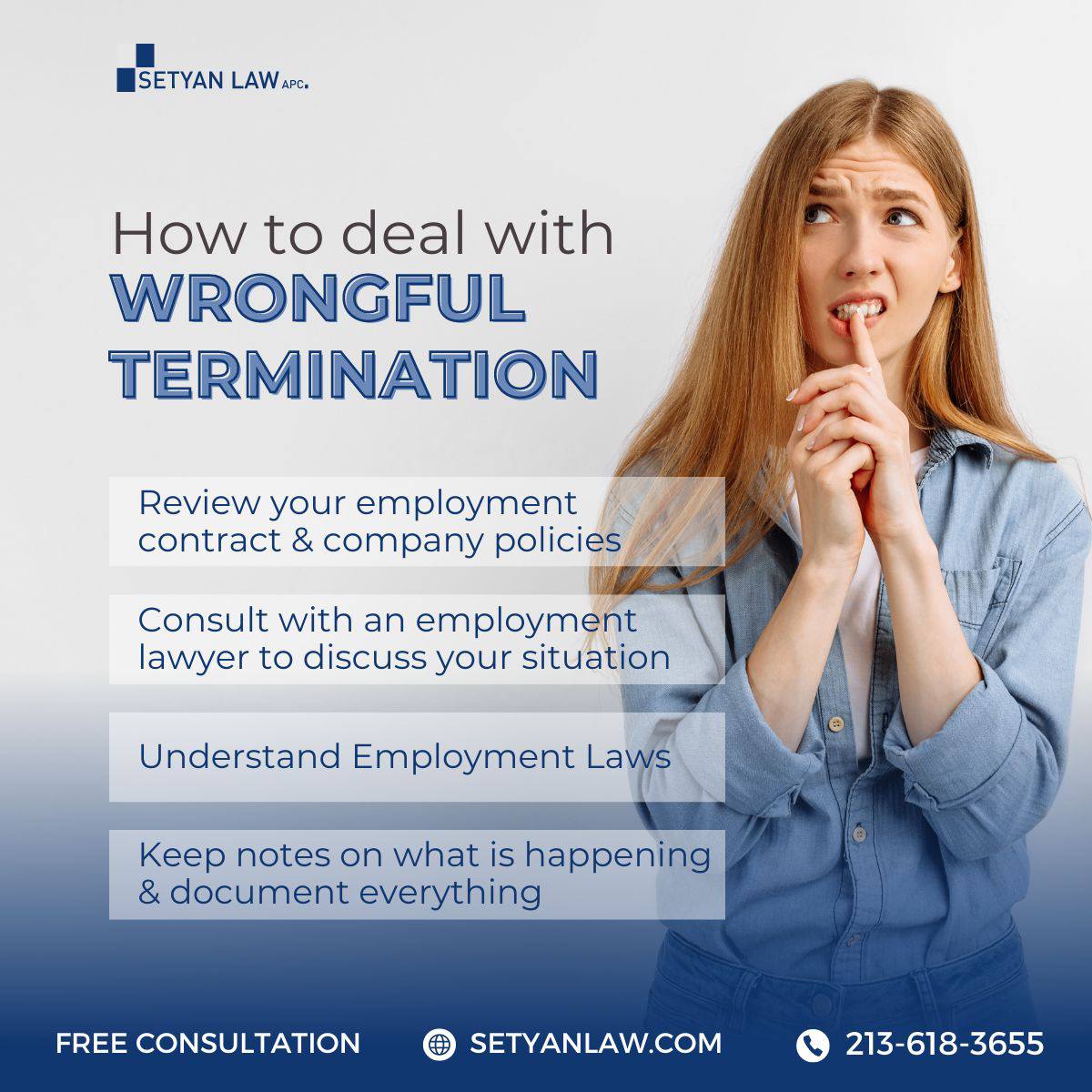
Steps to take immediately after being fired
- Request your personnel file and termination explanation in writing
- Secure copies of performance reviews and relevant communications
- Avoid signing separation agreements without legal review
- Apply for unemployment benefits promptly
- Contact a wrongful dismissal attorney for an initial consultation
By acting swiftly yet strategically, you position yourself for the strongest possible case while protecting your immediate financial interests.
Conclusion
Losing your job unexpectedly creates tremendous emotional and financial strain, yet understanding your legal rights provides a critical foundation for moving forward. Although California's "at-will" employment doctrine gives employers significant termination flexibility, this power certainly has limits. Discrimination, retaliation, contract violations, and public policy exceptions create substantial legal protections for wrongfully dismissed employees.
Time plays a crucial role in wrongful termination cases. Prompt action not only preserves essential evidence but also ensures you meet strict filing deadlines with agencies like the CRD and EEOC. Missing these deadlines can permanently eliminate your ability to seek justice, regardless of how strong your case might be.
A qualified Torrance wrongful dismissal attorney becomes your essential advocate throughout this challenging process. Their expertise helps distinguish between merely unfair terminations and those that violate California law. Additionally, they handle complex evidence gathering, communication with former employers, administrative filings, and ultimately secure the compensation you deserve.
Successful wrongful termination claims can recover significant damages. Back pay compensates for lost wages since termination, while front pay addresses future earnings when reinstatement proves impossible. Emotional distress damages acknowledge the psychological impact of unjust termination, and punitive damages punish particularly egregious employer misconduct.
The path forward after wrongful termination requires both courage and strategic action. Armed with knowledge about your rights and proper legal representation, you can effectively challenge illegal dismissal practices. Remember that California law provides meaningful protections against discriminatory, retaliatory, or otherwise illegal terminations – therefore, you need not accept unlawful treatment without recourse.