
Updated January 27, 2026
California Unpaid Wages: Time Limits You Can't Afford to Miss
Unpaid wages in California represent more than just missing money—they're your legal right, but one that expires if you don't act within specific timeframes. Unfortunately, thousands of workers lose their ability to recover earned compensation each year simply because they waited too long to file a claim.
Whether you're dealing with unpaid overtime, missed meal breaks, or final paycheck violations, California law provides strong protections for workers. However, these protections come with strict time limits that can permanently bar your recovery if missed. Depending on the specific violation, you may have as little as one year or up to four years to take legal action.
Understanding these deadlines isn't just important—it's essential for protecting your financial rights. This guide will walk you through California's wage claim time limits, explain potential exceptions that might extend your filing window, and provide clear steps for taking action before it's too late. By knowing exactly when the clock starts ticking, you can ensure you don't forfeit wages you've rightfully earned.
Understanding California Wage and Hour Laws
California's wage and hour laws rank among the most protective in the nation. Understanding these regulations is crucial for recovering unpaid wages when employers violate these standards.
Minimum wage and overtime rules
California's minimum wage reaches $16.90 per hour effective January 1, 2026, regardless of employer size . Certain industries have higher minimums, such as fast food workers who must receive at least $20.00 per hour since April 2024 . Additionally, many cities and counties throughout California have established higher local minimum wages that supersede the state requirement.
Overtime regulations in California extend beyond federal standards. Employers must pay:
- 1.5 times the regular rate for hours worked beyond 8 in a workday
- 1.5 times the regular rate for the first 8 hours on the seventh consecutive workday
- Double the regular rate for hours worked beyond 12 in a workday
- Double the regular rate for hours beyond 8 on the seventh consecutive day
Employers who fail to properly compensate workers according to these rules create grounds for unpaid wage claims.
Meal and rest break requirements
California law mandates specific breaks to prevent worker fatigue and ensure proper compensation. For meal periods, employers must provide:
- A 30-minute unpaid meal break for shifts exceeding 5 hours (must begin before the end of the 5th hour)
- A second 30-minute meal break for shifts exceeding 10 hours (must begin before the end of the 10th hour)
Meal breaks can be waived only through mutual consent and only in specific situations—such as when the workday will be completed in 6 hours or less .
For rest periods, employers must authorize:
- Paid 10-minute rest breaks for every 4 hours worked or "major fraction thereof"
- Rest periods positioned in the middle of each work period when practicable
Furthermore, employers must pay one additional hour at the regular rate for each workday a meal break violation occurs, and another hour for each day with a rest break violation . These "premium payments" are considered wages for the purpose of unpaid wage claims.
Final paycheck and recordkeeping obligations
Final paycheck timing requirements vary based on separation circumstances:
- Terminated employees must receive all wages immediately at the time and place of discharge
- Employees who quit with at least 72 hours' notice must be paid at the time of quitting
- Employees who quit without notice must be paid within 72 hours
Final paychecks must include all earned wages, including earned but unused vacation time . Employers who willfully fail to pay final wages on time face waiting time penalties of up to 30 days of additional wages .
Proper recordkeeping serves as vital protection for workers' wage rights. California employers must:
- Maintain payroll records for at least three years
- Keep time cards and work schedules for at least two years
- Provide detailed wage statements with each payment
These wage statements must include specific information such as gross wages earned, hours worked, hourly rates, and deductions . Employees who discover their wage statements are missing required information can seek penalties up to $4,000 .
Understanding these fundamental labor protections establishes the foundation for recognizing when you might have a valid unpaid wage claim—and how long you have to act on it.
Time Limits for Filing Unpaid Wage Claims
Filing deadlines for unpaid wage claims in California follow strict timelines that vary based on the type of violation. Missing these critical deadlines can permanently bar your right to recover money you've rightfully earned. Let's examine each deadline category and understand exactly what claims fall under each timeframe.
1-year deadline: Pay stub violations
The shortest filing window applies to specific documentation-related violations. You must file within one year for:
- Penalties regarding bounced paychecks
- Failing to provide access to payroll or personnel records
- Pay stub violations, such as missing or inaccurate information on itemized wage statements
- Penalties under Labor Code section 210 for late payment of wages
These violations typically involve your right to receive proper documentation rather than the wages themselves. Nevertheless, prompt action is essential as the one-year clock starts ticking immediately after each violation occurs.
2-year deadline: Oral agreements
When your wage claim stems from verbal promises, the timeframe extends slightly. You have two years to file claims related to:
- Oral promises to pay more than minimum wage
- Standard claims under the federal Fair Labor Standards Act (FLSA)
Oral agreements often prove challenging to verify without witnesses or supporting evidence. Therefore, it's advisable to document any verbal wage promises through email confirmation or other written means whenever possible.
3-year deadline: Overtime, breaks, misclassification
Most common wage violations fall under a three-year statute of limitations. You have three years from the date of violation to file claims for:
- Minimum wage violations
- Unpaid overtime
- Meal and rest break violations
- Employee misclassification (from your last day of work)
- Unpaid sick leave
- Illegal deductions from paychecks
- Unreimbursed business expenses
- Waiting time penalties for late final wages
This three-year period begins on the date each violation occurred, not when you discovered it. For recurring violations like consistent underpayment, each paycheck potentially starts a new three-year window for that specific violation.
4-year deadline: Written contracts and unfair practices
The longest timeframe applies to contract-based claims and broader violations. You have four years to file for:
- Violations of written employment contracts
- Claims involving unfair business practices under California's Unfair Competition Law
- Employee misclassification if your employment contract was breached
Notably, many three-year wage violations can be extended to four years if you can demonstrate the employer engaged in unfair business practices . This extension provides valuable additional time when complex wage theft patterns exist.
Failure to file within these appropriate timelines will permanently forfeit your right to recover unpaid wages . While exceptions exist (covered in the next section), these deadlines generally represent hard cutoffs for wage claims in California. Consequently, employees should track potential violations carefully and consult with an employment attorney promptly if they suspect their wage rights have been violated.
Exceptions That Can Extend Your Deadline
Even after standard deadlines have passed, California law offers several exceptions that might still allow you to pursue unpaid wage claims. Knowing these legal lifelines could make the difference between recovering your hard-earned money and losing it forever.
Unfair business practices under UCL
California's Unfair Competition Law (UCL) stands as one of the most powerful deadline extensions available to workers. This provision effectively extends the standard three-year statute of limitations to four years for wage violations that also qualify as unfair business practices . The UCL covers any "unlawful, unfair or fraudulent business act," making it applicable to most wage violations .
This extension proves especially valuable for employees with claims involving:
- Systematic wage theft affecting multiple workers
- Deceptive payroll practices
- Violations that occurred between three and four years ago
A California appeals court ruling further expanded the UCL's scope to provide a remedy for discrimination claims as well, significantly increasing potential employer liability .
Employer concealment or fraud
When employers actively hide violations or engage in deception, the clock may temporarily stop running on your claim through legal principles known as equitable tolling and estoppel . In practice, this means your filing deadline could be extended if:
- Your employer concealed records or deliberately withheld information
- You were prevented from discovering labor code violations earlier
- Your employer's actions misled you about your rights
- You acted in good faith but extraordinary circumstances prevented timely filing
Importantly, courts apply these exceptions strictly. Although equitable tolling isn't available for Labor Commissioner decision appeals , it remains a viable option for initial wage claims in cases of employer misconduct.
Labor Commissioner investigations
Filing a complaint with California's Labor Commissioner can effectively pause certain deadlines during the investigation period . This administrative process offers two key timeline advantages:
First, the investigation period itself doesn't count against your statute of limitations for many types of claims. Second, the same statutes of limitations (two-, three-, and four-year periods) apply to Labor Commissioner claims as to civil court filings .
Although Labor Commissioner investigations may extend your effective filing window, they don't eliminate deadlines entirely. The agency still applies the same statutory time limits to determine claim eligibility.
Federal vs. state filing options
Workers in California can choose between filing under federal or state law, each with distinct timelines. The federal Fair Labor Standards Act (FLSA) allows:
- Two years for standard wage violations
- Three years for willful violations where the employer knew or showed reckless disregard for FLSA compliance
Meanwhile, California's more generous deadlines typically provide better recovery options . In particular:
- California allows recovery for three years (versus FLSA's two) for most wage violations
- California offers additional penalties and remedies unavailable under federal law
As a result, pursuing claims under California state law generally proves more beneficial, except in unusual cases where federal filing might preserve claims after state deadlines have expired .
Above all, consulting with an employment attorney promptly remains the most effective strategy for preserving your rights, as even these exceptions have specific requirements and limitations.
How to File a Wage Claim in California
Taking action to recover unpaid wages requires navigating specific procedural steps in California's wage claim system. Understanding these procedures helps ensure your claim meets all requirements before filing deadlines expire.
Gathering documentation and evidence
Initially, collect all available documentation to strengthen your case. Essential records include:
- Time cards or personal records of hours worked
- Paystubs and wage statements
- Bounced paychecks (if applicable)
- Employment information notices showing your pay rate
- Any communication with your employer about wages
For irregular work schedules, the Labor Commissioner may require additional worksheets for unpaid wages, commissions, business expenses, or vacation pay . Though employers are legally required to maintain accurate records, keeping your own documentation significantly strengthens your position .
Choosing between Labor Commissioner and civil court
Workers have two primary options for pursuing unpaid wage claims:
Filing with the California Labor Commissioner (DLSE) offers a straightforward, no-cost administrative process. Alternatively, civil court provides expanded benefits yet requires more formal procedures .
Civil court advantages include a four-year lookback period (versus three years at the DLSE) and the possibility of recovering attorney fees if successful . DLSE claims typically take longer to resolve—sometimes years—whereas civil court cases often conclude within one year .
Calculating unpaid wages and penalties
To determine owed compensation, methodically document:
- Regular wages: Multiply hourly rate by unpaid regular hours
- Overtime: Calculate at 1.5x or 2x regular rate based on California thresholds
- Meal/rest break violations: Add one hour of pay per workday for each violation type
- Waiting time penalties: Up to 30 days of wages for delayed final paychecks
Organize this information chronologically to create a clear timeline showing when payment was due versus received .
Steps for employers to respond
Once a claim is filed, employers receive written notice with an opportunity to respond . Within 30 days, the Labor Commissioner must decide whether to:
- Accept the matter for administrative hearing
- Pursue civil action
- Take no action
Most cases proceed to a settlement conference where both parties attempt resolution . If unsuccessful, a formal hearing follows where evidence is presented under oath . Employers who fail to appear risk having the case decided based solely on employee evidence .
What Happens If You Miss the Deadline
Missing wage claim deadlines in California carries permanent consequences that few workers fully understand. The repercussions extend beyond simply delaying your case—they can completely eliminate your right to compensation.
Loss of right to recover wages
Once your statute of limitations expires, courts will dismiss your claim regardless of its merit . This represents a permanent forfeiture of your unpaid wages, even when evidence clearly shows labor code violations . Unfortunately, missing a deadline by even a single day can prevent you from recovering money you legitimately earned . In most cases, the "good faith dispute" defense that might protect employers doesn't extend to employees who file late claims .
Impact on class action eligibility
Late filings typically disqualify you from joining related class actions. Courts rarely accept excuses for missed class certification deadlines , considering even staffing issues or administrative errors as inexcusable neglect . If the settlement terms are binding, missing the deadline means losing your right to compensation entirely .
Employer liability and penalties if filed on time
Conversely, employers face substantial consequences when claims are filed promptly. Timely wage claims can result in payment of all wages owed plus interest, statutory penalties, attorneys' fees, and additional damages for unfair business practices . Starting January 2026, employers with unpaid wage judgments face triple penalties if judgments remain unsatisfied after 180 days . Public prosecutors can now pursue these cases with mandatory attorney fee reimbursement , creating powerful incentives for employers to resolve wage claims quickly.
Conclusion
Time limits for unpaid wage claims serve as critical boundaries that determine whether California workers can recover money rightfully earned. Understanding these deadlines remains essential for protecting your financial rights under state law. The stakes certainly matter—missing a deadline by even a single day permanently eliminates your ability to recover compensation, regardless of how clear-cut your case might be.
Each violation category carries specific timeframes that demand close attention. Pay stub violations expire after just one year, while oral agreements last two years. Most common wage issues including overtime, meal breaks, and misclassification claims provide three years to act. Written contracts offer the longest protection at four years.
Exceptions exist that might extend your filing window. The Unfair Competition Law potentially adds an extra year to many claims. Employer concealment sometimes pauses deadlines temporarily. Nevertheless, these exceptions apply narrowly and require substantial evidence.
Filing a successful claim demands thorough documentation—time cards, paystubs, communications with employers—all strengthen your position significantly. Workers face an important choice between pursuing claims through the Labor Commissioner or civil court, each offering distinct advantages depending on your specific circumstances.
Employers who violate wage laws face considerable consequences when workers act promptly. The law provides for full repayment plus interest, penalties, and attorney fees. Consequently, most employers prefer settling valid claims rather than risking additional liability through prolonged disputes.
California offers some of America's strongest wage protections, though these safeguards only work when employees understand and assert their rights within legal timeframes. Taking immediate action after discovering potential violations represents your best strategy for recovering unpaid wages. Therefore, consulting with an employment attorney promptly after identifying wage issues helps ensure you preserve all available legal remedies before critical deadlines expire.
References
https://www.dir.ca.gov/dlse/howtofilewageclaim.htm
https://www.dir.ca.gov/dlse/Late-Payment-of-Wages.htm
https://ogletree.com/insights-resources/blog-posts/california-court-of-appeal-affirms-strict-jurisdictional-deadline-for-appeals-of-labor-commissioner-decisions/
https://www.dir.ca.gov/dlse/dlseSupportingDocs.html
https://setyanlaw.com/calculating-california-waiting-time-penalties/
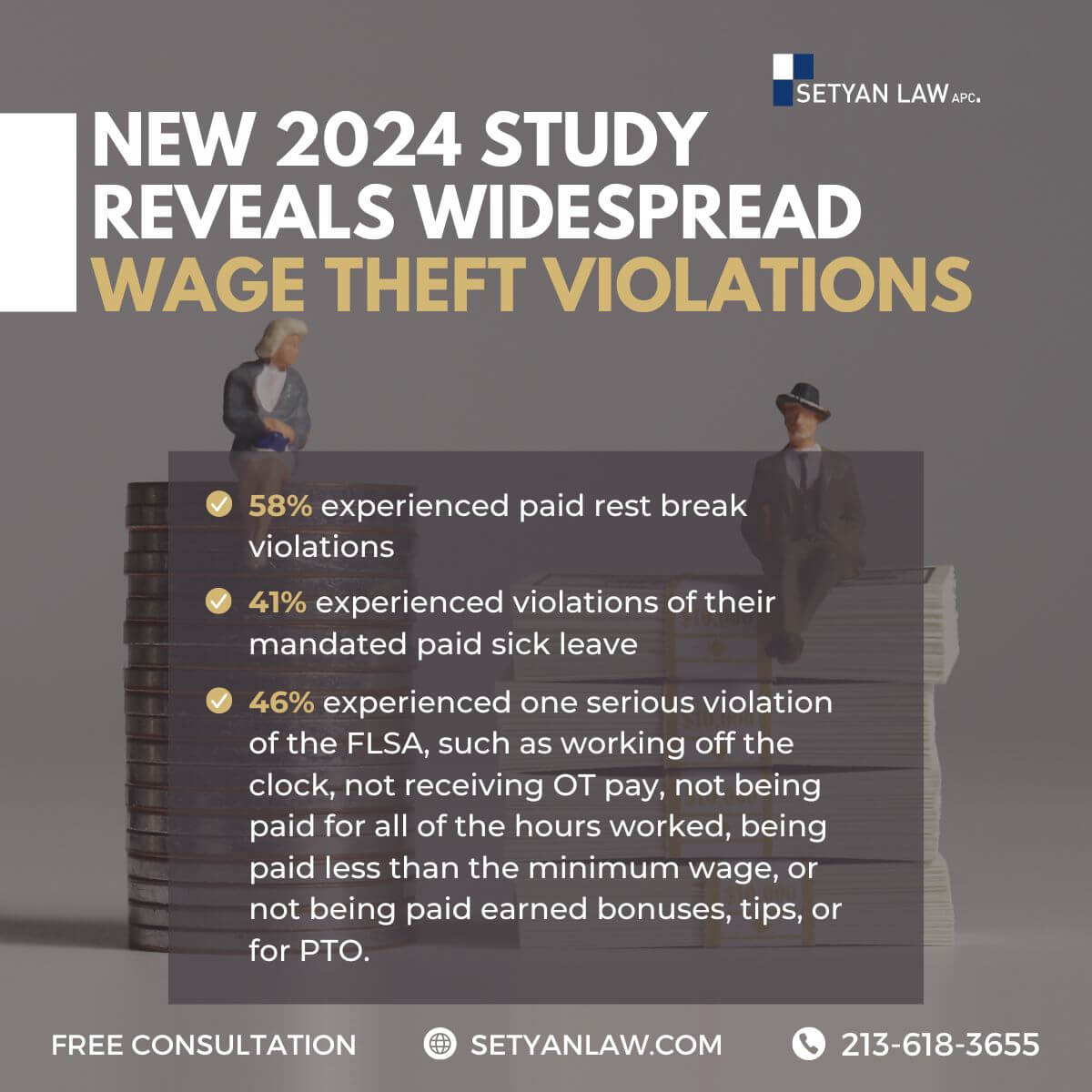
If you’re employed by a California employer, contact an expert Wage Theft Attorney first, for expert assistance regarding your case. Call today for a free and confidential consultation.