Updated January 25, 2026
When Workplace Favoritism Becomes Illegal: A California Employee's Guide
Workplace favoritism happens in nearly every office, store, or factory across California. While watching your manager give the best assignments to their "pet" employee can be frustrating, not all favoritism violates the law. However, when preferential treatment connects to protected characteristics like race, gender, or age, what seems like simple favoritism transforms into illegal discrimination.
Many California employees struggle to identify when unfair treatment crosses the line from annoying to actionable. In fact, subtle forms of discrimination often disguise themselves as mere favoritism, leaving workers unsure about their rights and potential legal options. Understanding this distinction is crucial if you're facing unequal treatment at work.
This guide examines when workplace favoritism becomes illegal in California, how to recognize the warning signs, and what steps you can take to protect your rights and career. Whether you're dealing with unjustified promotions, biased assignments, or exclusion from opportunities, knowing when and how to take action can make all the difference in addressing workplace injustice.
What is Favoritism and When Is It a Problem?
Favoritism exists in virtually every workplace, but understanding when it crosses the line is essential for California employees. According to the Global Business Ethics Survey®, 39% of employees have witnessed favoritism firsthand, making it the most commonly observed form of workplace misconduct .
Understanding workplace favoritism
Workplace favoritism occurs when certain employees receive preferential treatment based on personal relationships rather than job performance or merit. This preference manifests when managers give select employees better opportunities, more desirable assignments, or frequent praise regardless of their actual contributions.
The distinction between normal workplace relationships and problematic favoritism often blurs. As one expert notes, everyone has colleagues they get along with better, but favoritism extends beyond casual friendships. It creates situations where professional decisions become influenced by personal connections instead of qualifications or achievements.
Notably, favoritism doesn't always appear obvious. Sometimes preferential treatment disguises itself as recognition of skill, making it challenging to identify. For instance, if a manager consistently assigns prestigious projects to one employee, determining whether this stems from legitimate recognition of ability or personal preference requires examining patterns of behavior.
Examples of acceptable vs. unfair favoritism
Some forms of favoritism, though potentially unfair, remain legal under employment law:
- Promoting friends outside of work
- Favoring employees who share personal interests or hobbies
- Giving special projects to those with longer tenure
- Preferential treatment based on genuine skill differences
Favoritism becomes problematic—and potentially illegal—when it's based on discrimination, harassment, retaliation, or violates stated company policies . For example, when decisions regarding promotions, assignments, or work distribution consistently disadvantage employees based on protected characteristics like race, gender, age, religion, or disability, what appears as simple favoritism becomes unlawful discrimination.
A revealing case emerged in a 2021 report where Black servers at an upscale Manhattan restaurant claimed they were consistently assigned lower-paying shifts than non-Black coworkers . Similarly, a female salesperson sued Wells Fargo alleging male colleagues received larger, more profitable accounts because they were considered "sole breadwinners" while she was viewed as earning a "second income" .
Why favoritism can harm workplace morale
Even when legal, unchecked favoritism causes significant damage to workplace culture and productivity. Employees experiencing or witnessing preferential treatment typically report decreased job satisfaction and motivation.
The impact extends beyond individual frustration. Research from the O.C. Tanner Institute found that favoritism can increase the odds of employee burnout by 23% . Furthermore, organizations with pervasive favoritism often experience higher turnover rates, costing them valuable talent and institutional knowledge.
Workplace morale deteriorates as employees perceive that connections matter more than competence. This perception erodes trust in leadership and undermines collaboration. Additionally, favoritism stifles innovation as employees become less willing to contribute ideas in environments where recognition seems predetermined rather than merit-based.
A particularly troubling finding from Penn Schoen Berland and Georgetown University research revealed that 75% of senior executives admitted witnessing favoritism, with 23% acknowledging they practice it themselves . This disconnect between leadership awareness and action perpetuates the problem, creating environments where unfair treatment becomes normalized despite its destructive effects.
When Favoritism Becomes Illegal in California
In California, the line between legal workplace favoritism and unlawful discrimination is clearly defined by state and federal laws. Understanding where this boundary lies proves essential for employees facing unfair treatment at work.
Protected characteristics under FEHA and Title VII
California offers some of the most comprehensive workplace protections in the nation through the Fair Employment and Housing Act (FEHA). This state law prohibits discrimination based on an extensive list of protected characteristics, including:
- Race, color, or national origin
- Religion
- Sex, gender, gender identity, and gender expression
- Sexual orientation
- Disability (physical and mental)
- Medical condition
- Genetic information
- Marital status
- Age (40 and over)
- Military or veteran status
- Pregnancy, childbirth, and related conditions
FEHA applies to employers with five or more employees, casting a wider net than federal protections. Comparatively, Title VII of the Civil Rights Act of 1964 offers federal protection against discrimination based on race, color, religion, sex (including pregnancy, sexual orientation, and gender identity), and national origin.
Related Article

Discrimination vs. favoritism: key differences
Not all workplace favoritism qualifies as illegal, even when it feels unfair. The critical distinction lies in the motivation behind preferential treatment.
Favoritism becomes illegal discrimination when preferential treatment is given based on protected characteristics. As one employment law expert states, "The litmus test to determine whether preferential treatment is illegal is whether it violates any state or federal law regarding a discriminatory practice."
Consider these scenarios:
- A manager promoting only younger employees over equally qualified older workers could constitute age discrimination
- Consistently giving better assignments to male employees over equally qualified female employees might qualify as gender discrimination
- Providing training opportunities exclusively to employees of a certain race would likely violate anti-discrimination laws
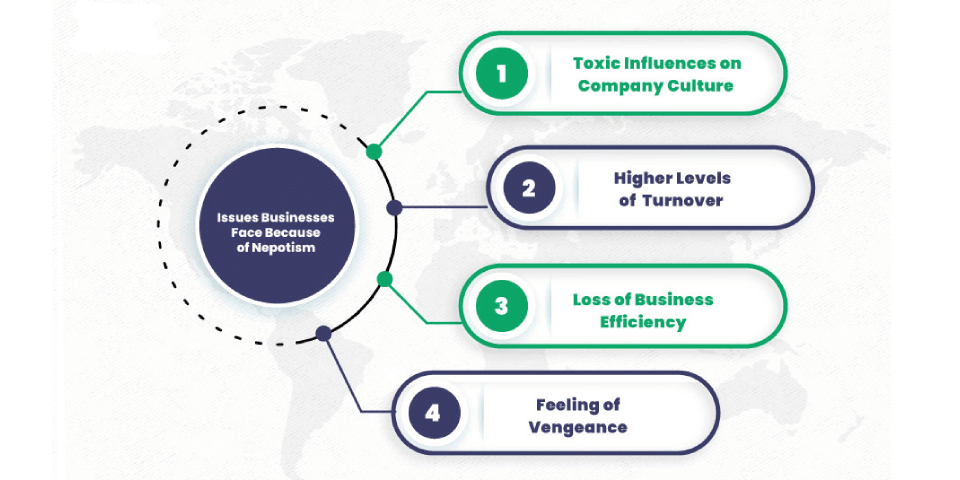
Favoritism involving family members (nepotism) often frustrates employees yet generally remains legal unless it disproportionately impacts protected groups. For instance, if an employer only hires or promotes family members of a specific race, this practice could violate anti-discrimination laws.
How sexual favoritism can lead to harassment claims
Sexual favoritism presents a unique legal challenge in California workplaces. In the landmark 2005 case Miller v. Department of Corrections, the California Supreme Court unanimously ruled that widespread sexual favoritism can create a hostile work environment, even for employees not directly propositioned.
Although isolated instances of favoritism toward romantic partners generally don't constitute harassment, the court held that when sexual favoritism becomes sufficiently widespread, it may create an actionable hostile environment. This occurs because such behavior conveys a demeaning message that management views female employees as "sexual playthings" and implies that women must engage in sexual conduct with supervisors to advance professionally.
The Equal Employment Opportunity Commission recognizes that if favoritism based on granting sexual favors becomes widespread, both men and women who find this offensive can establish a hostile work environment claim, regardless of whether any objectionable conduct was directed at them specifically.
Consequently, employers face increased liability when romantic relationships between supervisors and subordinates result in preferential treatment that negatively affects workplace culture. This legal standard reinforces that even consensual sexual relationships can potentially create actionable harassment claims when they lead to widespread favoritism that undermines workplace equity.
Common Signs of Illegal Favoritism
Recognizing the warning signs of illegal favoritism requires careful observation of workplace patterns. Even subtle behaviors can reveal discriminatory practices that violate California employment law. Being able to identify these red flags helps employees determine when to take action.
Unjustified promotions or raises
Promotion and compensation decisions based on personal relationships rather than merit represent one of the most common forms of workplace favoritism. According to research, 43% of employees have witnessed favoritism specifically in promotions and raises .
Look for these telling signs:
- Employees jumping multiple levels up without meeting necessary performance metrics
- Vague justifications like "culture fit" rather than concrete performance data
- Undeserved positive evaluations for certain employees while others receive excessive scrutiny
- Pay disparities that can't be explained by experience, performance, or qualifications
Fundamentally, when promotions consistently favor employees from non-protected classes over equally or better-qualified employees from protected groups, this pattern may constitute illegal discrimination.
Bias in assignments and recognition
The distribution of work assignments often reveals hidden favoritism that may cross legal boundaries. Research shows women and members of underrepresented groups are more frequently channeled into "execution" or project management roles rather than receiving high-value, high-visibility assignments .
Pay attention to who receives career-advancing opportunities. High-visibility projects consistently going to one person without a clear selection process—while equally qualified peers receive low-value work offering no chance for professional growth—suggests potential discrimination . Moreover, this pattern creates fewer opportunities for certain employees to creatively contribute, learn, and innovate, ultimately leading to lower job satisfaction and higher turnover rates .
Exclusion from meetings or opportunities
Exclusion serves as another powerful indicator of illegal favoritism. When certain employees must be part of a specific lunch group to access team direction, it creates an information gap that disadvantages others .
This exclusionary behavior takes multiple forms:
- Being left out of strategic discussions directly related to your work
- Finding yourself consistently uninformed about important decisions
- Experiencing social isolation from workplace activities and networks
- Having your ideas routinely dismissed or undermined
Practically speaking, when exclusion patterns align with protected characteristics, what appears as simple favoritism may actually constitute illegal discrimination.
Retaliation after reporting misconduct
Retaliation ranks as the most frequently alleged basis of discrimination in the federal sector . After reporting harassment, discrimination, or other workplace violations, employees may face subtle or overt forms of retaliation that constitute illegal favoritism.
Watch for these retaliatory actions:
- Receiving lower performance evaluations than deserved
- Being transferred to less desirable positions
- Facing increased scrutiny from management
- Experiencing isolation or ostracism
- Having work schedules changed to conflict with family responsibilities
Critically, employers cannot legally take any action that would discourage someone from resisting or complaining about discrimination . Such retaliatory favoritism not only harms individual employees but can negatively impact overall employee morale.
How to Document and Report Favoritism
Taking action against workplace favoritism requires thorough documentation and following proper reporting channels. Confronting unfair treatment effectively demands a strategic approach to protect your rights and career.
Keeping a detailed record of incidents
Documentation serves as your strongest ally when addressing favoritism in the workplace. Initially, create a comprehensive journal of all concerning incidents. Your records should include:
- Dates, times, and locations
- Names of individuals involved and witnesses
- Detailed descriptions of what occurred
- Any evidence like emails, text messages, or screenshots
- Disciplinary records if relevant
Be objective in your documentation, focusing on factual accounts rather than opinions. These detailed records help identify patterns that might not be immediately obvious, such as certain groups consistently being overlooked for opportunities . Furthermore, these notes become invaluable if you need to report the issue to appropriate authorities.
Reviewing your employee handbook
Prior to filing any complaint, thoroughly examine your company's anti-discrimination policies and grievance procedures. Most employee handbooks contain specific sections addressing favoritism, personal relationships at work, and reporting mechanisms. Understanding these policies helps demonstrate how the unfavorable treatment violates established company standards .
Pay special attention to policies regarding:
- Chain of command for reporting issues
- Timelines for investigations
- Protections against retaliation
- Documentation requirements
Filing an internal complaint with HR
Once you've gathered documentation and reviewed company policies, the next step typically involves reporting the issue internally. This creates an essential paper trail should your employer fail to address the problem . When filing your complaint:
- Stick to facts rather than emotions
- Reference specific company policies being violated
- Provide copies of your documentation
- Clearly outline the pattern of favoritism
- Request specific remedial action
Remember that California's Fair Employment and Housing Act requires employers to prevent and address discrimination, giving your internal complaint legal weight .
When to escalate to legal counsel
Certain situations warrant consulting an employment attorney, especially after exhausting internal channels without resolution. Consider seeking legal advice if:
- Your complaint received no response or inadequate investigation
- You experienced retaliation after reporting
- The favoritism clearly connects to protected characteristics
- Your employment or mental health suffers due to ongoing issues
- You fear for your job security
Should you decide to pursue legal action, most employment lawyers offer free consultations to evaluate your case. They can help determine if your situation justifies filing a complaint with California's Civil Rights Department, which has jurisdiction over workplace discrimination claims throughout the state.
Remember the time limit—typically 180 to 300 days after each incident—for filing formal complaints . Acting promptly gives you the best chance of protecting your rights and addressing workplace favoritism effectively.
Legal Options for California Employees
California employees facing illegal workplace favoritism have several legal pathways available beyond internal complaints. Understanding these options ensures you can effectively address discrimination when company procedures fail to resolve issues.
Filing a complaint with the Civil Rights Department
California's Civil Rights Department (formerly DFEH) serves as the primary agency for handling workplace discrimination claims . To initiate this process:
- Create an account in the Cal Civil Rights System for online filing
- Complete a paper form and mail it
- Call the agency directly
You must file within three years from the date of discrimination . Your complaint should include specific incidents with dates, employer information, witness contacts, and supporting documentation like emails, reprimands, or medical records .
Requesting a right-to-sue letter
If you prefer not to wait for a CRD investigation, you can request an immediate "right-to-sue" letter . This document grants permission to file a lawsuit directly . Remember:
- Requesting this letter means surrendering the option for a CRD investigation
- After receiving it, you have limited time to file in court
- For federal cases, you have just 90 days to file after receiving an EEOC right-to-sue letter
What to expect during a legal case
Once your complaint is accepted, CRD prepares a formal complaint delivered to your employer . The process typically includes:
- Your employer must respond within a specified timeframe
- Both parties usually attend mandatory mediation first
- If mediation fails, CRD may file a claim on your behalf
With successful claims, you might recover damages for emotional distress, out-of-pocket losses, civil penalties, or even punitive damages .
How an employment lawyer can help
Employment attorneys primarily handle the technical aspects of discrimination cases, substantially improving outcomes . They can:
- Evaluate case strength during initial consultation
- Ensure deadlines are met
- Gather and present compelling evidence
- Navigate complex legal procedures
Studies show employees rarely win discrimination trials, yet most cases settle before court . A skilled attorney maximizes settlement potential while helping you avoid litigation's emotional toll.
Conclusion
Workplace favoritism exists in almost every professional environment across California. Though frustrating, most cases remain legal despite their negative impact on morale and productivity. The critical distinction lies in whether preferential treatment connects to protected characteristics such as race, gender, age, or disability status.
Recognizing the warning signs becomes essential for any employee facing unfair treatment. Patterns of unjustified promotions, biased assignment distribution, systematic exclusion, or retaliation after reporting misconduct often signal potentially illegal discrimination rather than simple favoritism.
Documentation serves as your strongest defense when confronting workplace inequality. Detailed records of incidents, thorough knowledge of company policies, and proper utilization of internal reporting channels create a foundation for addressing these issues effectively. Companies must take these reports seriously, as California law places significant responsibility on employers to prevent discrimination.
Legal remedies remain available when internal processes fail. Filing a complaint with California's Civil Rights Department, requesting a right-to-sue letter, or consulting with an employment attorney provides paths forward for employees experiencing discrimination disguised as favoritism. Time limits apply to these options, therefore swift action maximizes your chances of successfully addressing workplace injustice.
The distinction between annoying favoritism and illegal discrimination might seem subtle at first glance. Nevertheless, understanding this difference empowers California employees to recognize when their rights have been violated and take appropriate action. Your career deserves protection from unlawful treatment, regardless of how cleverly it disguises itself as mere preference. Equipped with knowledge about warning signs, documentation strategies, and legal options, you can effectively advocate for fair treatment in your workplace.
References
[1] – https://www.workhuman.com/blog/favoritism-in-the-workplace/
[3] – https://www.niagarainstitute.com/blog/signs-of-favoritism-at-work
[4] – https://www.wlcglobal.org/resource-center/news-blog/favoritism-toxic
[5] – https://www.linkedin.com/pulse/favoritism-workplace-7-red-flags-you-shouldnt-ignore-anymore-xw9gf
[6] – https://ncwit.org/resources/tips-for-reducing-unconscious-bias-in-employee-task-assignment/
[7] – https://www.eeoc.gov/retaliation
[9] – https://employeejustice.com/blog/how-to-report-an-employer-for-unfair-treatment/
[12] – https://calcivilrights.ca.gov/complaintprocess/how-to-file-a-complaint/
Why Choose Setyan Law, APC?
Consulting a workplace discrimination attorney will provide you with the necessary guidance and support to navigate the legal process effectively. Remember, time is of the essence, so seek legal advice promptly to maximize your chances of a successful outcome.

Call Setyan Law at (213)-618-3655 for a consultation.